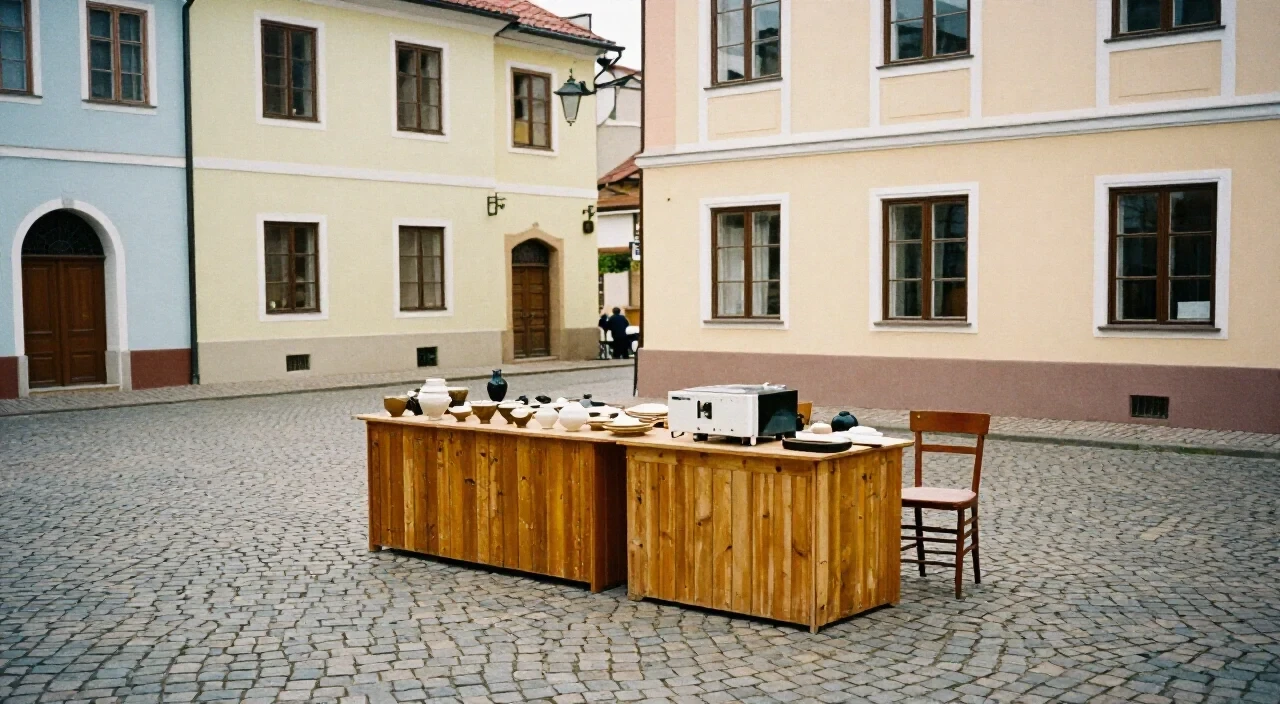
A pottery pop-up event can be held in Alfama, but it requires a municipal permit for public-space occupation, payment of area-based fees, a minimum 15-working-day application window, and compliance with noise and safety regulations. Follow this checklist to stay legal and smooth.
Do I need a permit for a pottery pop-up event in Alfama?
Yes, any temporary use of public streets, squares or pavements in Alfama requires a specific municipal permit for itinerant or temporary entertainment venues. Without it, the event is illegal and can be shut down by the city council.
Kaolin Ceramics Studio advises checking the Lisbon City Council portal for the “temporary occupation of public space” form. The application must be submitted at least 15 working days before the intended date. The form asks for organizer details, event description, exact location, and the total footprint of tables, chairs, and any equipment.
Common mistakes include assuming a private-venue licence covers a street pop-up, or only measuring the sales table rather than the entire occupied area. Measure the whole setup—including the kiln demo zone, display racks, and visitor circulation space—to avoid under-paying fees.
- Identify the exact street or square in Alfama.
- Sketch a layout showing every element and its dimensions.
- Add 1-2 metres of clearance around fragile pieces for pedestrian safety.
- Submit the completed form with supporting documents (insurance, risk assessment) before the deadline.
- Keep a copy of the approved permit on site during the event.
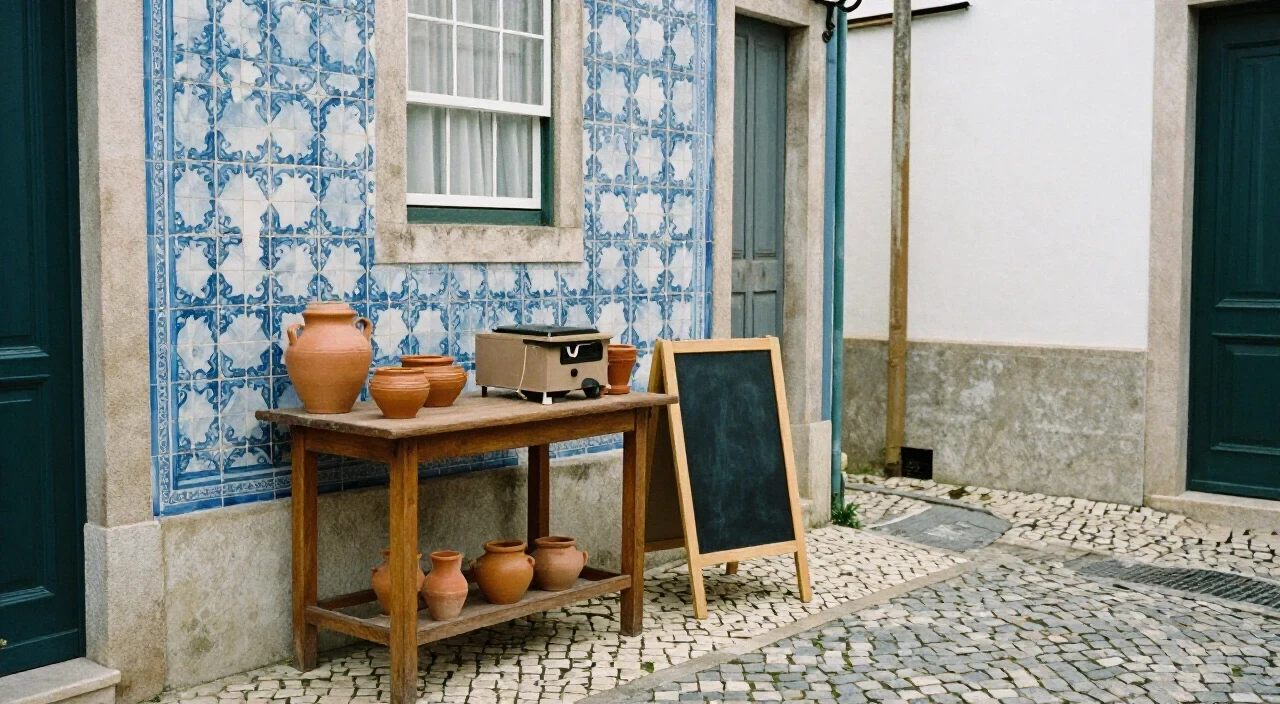
How much does a public-space permit cost for an Alfama pop-up?
The fee depends on the total occupied area. For up to 10 m² the daily charge is €65.20. From 11 m² to 100 m² the rate is €4.65 per m² per day, and any area above 100 m² is €2.30 per m² per day.
Calculate the cost by first measuring the full footprint of your setup, not just the sales table. For example, a 20 m² layout (kiln demo, display, and visitor flow) would cost €65.20 for the first 10 m² plus 10 m² × €4.65, totaling €111.70 for a single day. Multi-day events multiply the daily rate accordingly.
If you plan amplified music or a loud demonstration, a separate noise licence may apply, adding an extra charge not included in the base fee. Always confirm the exact amount with the council’s 2026 fee table dated 28 January 2026.
- Measure total area (including walkways).
- Apply the appropriate band: 0-10 m², 11-100 m², >100 m².
- Multiply by the number of days.
- Add any extra charges for noise or special equipment.
- Budget a small contingency for possible fee adjustments.
Key takeaways
- Submit the public-space permit at least 15 working days ahead
- Calculate fees using the three-band area rates (€65.20, €4.65/m², €2.30/m²)
- Measure the entire occupied footprint, not just sales tables
- Check separately for a noise licence if music or demos are loud
What steps ensure safety and compliance for a pottery pop-up in Alfama?
Safety starts with a risk assessment that covers fragile ceramics, kiln operation, and pedestrian traffic. Compliance also means having public liability insurance, clear signage, and a post-event clean-up plan.
Kaolin Ceramics Studio runs weekly kiln firings, so we know the importance of positioning the kiln away from high-foot-traffic zones and providing a fire-proof barrier. Secure the kiln on a stable, non-flammable surface and keep a fire extinguisher within reach. Display fragile pieces on low shelves with padded backing to prevent breakage from accidental bumps.
Create a visitor flow that leaves at least one metre of clearance on either side of the demo area. Mark this space with rope or tape. Provide clear signage for “Do not touch hot surfaces” and “Exit route”. After the event, collect all waste, clean the pavement, and restore the area to its original condition to avoid fines.
- Draft a written risk assessment (kiln, breakage, crowd control).
- Obtain public liability insurance covering temporary events.
- Position the kiln on a fire-proof mat, with a minimum 1 m safety perimeter.
- Use sturdy tables, secure wheels, and non-slip mats.
- Mark pedestrian pathways and keep exits unobstructed.
- Arrange for a clean-up crew to restore the street the same day.
Kaolin Ceramics Studio runs weekly kiln firings, so we know the importance of positioning the kiln away from high-foot-traffic zones and providing a fire-proof barrier.
How early should I apply for the Alfama event licence and what documents are required?
Apply at least 15 working days before the event date. The municipal portal asks for organizer ID, a site plan, insurance proof, and a brief description of activities, including any kiln demonstrations or amplified sound.
The site plan must show the exact location, dimensions of every structure, and the safety buffer zones. Attach a copy of your public liability policy and a risk assessment signed by a responsible adult. If you intend to sell ceramics, include a statement that sales will be limited to handmade items produced on site.
Submitting early prevents last-minute rejections that could force a cancellation. Keep a digital copy of the approved licence on your phone and a printed version at the venue. If the council requests modifications, you’ll have time to adjust the layout without impacting promotion or bookings.
- Prepare a scaled site plan (hand-drawn or CAD).
- Gather organizer identification and tax number.
- Provide insurance certificate (public liability).
- Write a concise activity description (kiln demo, sales, music).
- Submit the full package through the city’s online portal 15+ working days ahead.
- Monitor email for council feedback and be ready to revise the plan.
Always double-check the exact area you will occupy; under-estimating square metres is the most common cause of unexpected permit fees and possible fines.
Frequently asked questions
Do I need a separate licence to sell ceramics on the street?
Yes. Selling handmade pottery in a public space requires the same public-space occupation permit, plus proof that the items are produced on site and compliance with consumer-sales regulations.
Can I host the pop-up inside a café instead of a street?
A private indoor venue follows a different licensing route, usually covered by the café’s existing commercial licence. However, you still need insurance and may need a fire-safety assessment if a kiln is used.
What is the minimum notice period for a noise licence in Alfama?
Noise licences are requested through the same municipal portal and should be submitted together with the public-space permit, respecting the 15-working-day deadline. Additional fees apply if amplified sound exceeds the standard limit.