Buff stoneware
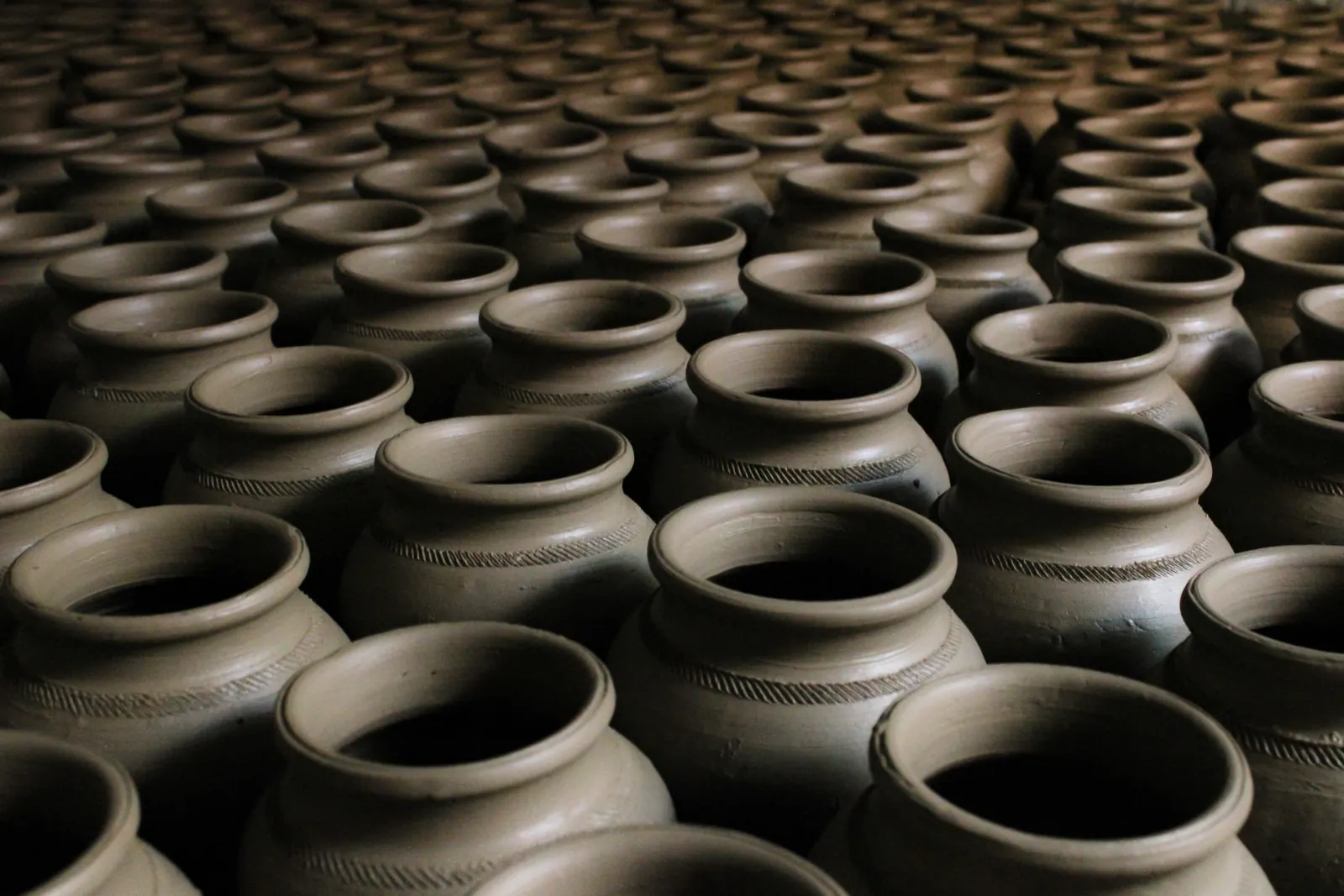
Our everyday clay: forgiving on the wheel and strong once fired.
The studio
Every pot here goes through the same six steps and two firings. It takes about three weeks, and it can't really be hurried.
01 · Wedge
Clay is kneaded on a canvas table, a bit like bread, until it's even and without air pockets that could crack in the kiln.
room temperature02 · Throw
On the wheel, the clay is pushed to the centre, opened with the thumbs, and the walls are pulled up in two or three slow passes.
on the wheel03 · Shape
With a rib and wet fingers the cylinder becomes a bowl, a vase or a cup. The rim gets compressed so it doesn't chip.
on the wheel04 · Trim
When it's leather-hard, the pot goes back on the wheel upside down and we carve the foot ring with a loop tool.
leather-hard05 · Dry & bisque
Pots dry for a week or more, then go through a first bisque firing, around 950 °C, which makes them hard and porous.
bisque · around 950 °C06 · Glaze & fire
We dip them in glaze and fire again, around 1,240 °C for our stoneware. The glaze melts into glass; the clay becomes stone-hard.
glaze firing · around 1,240 °C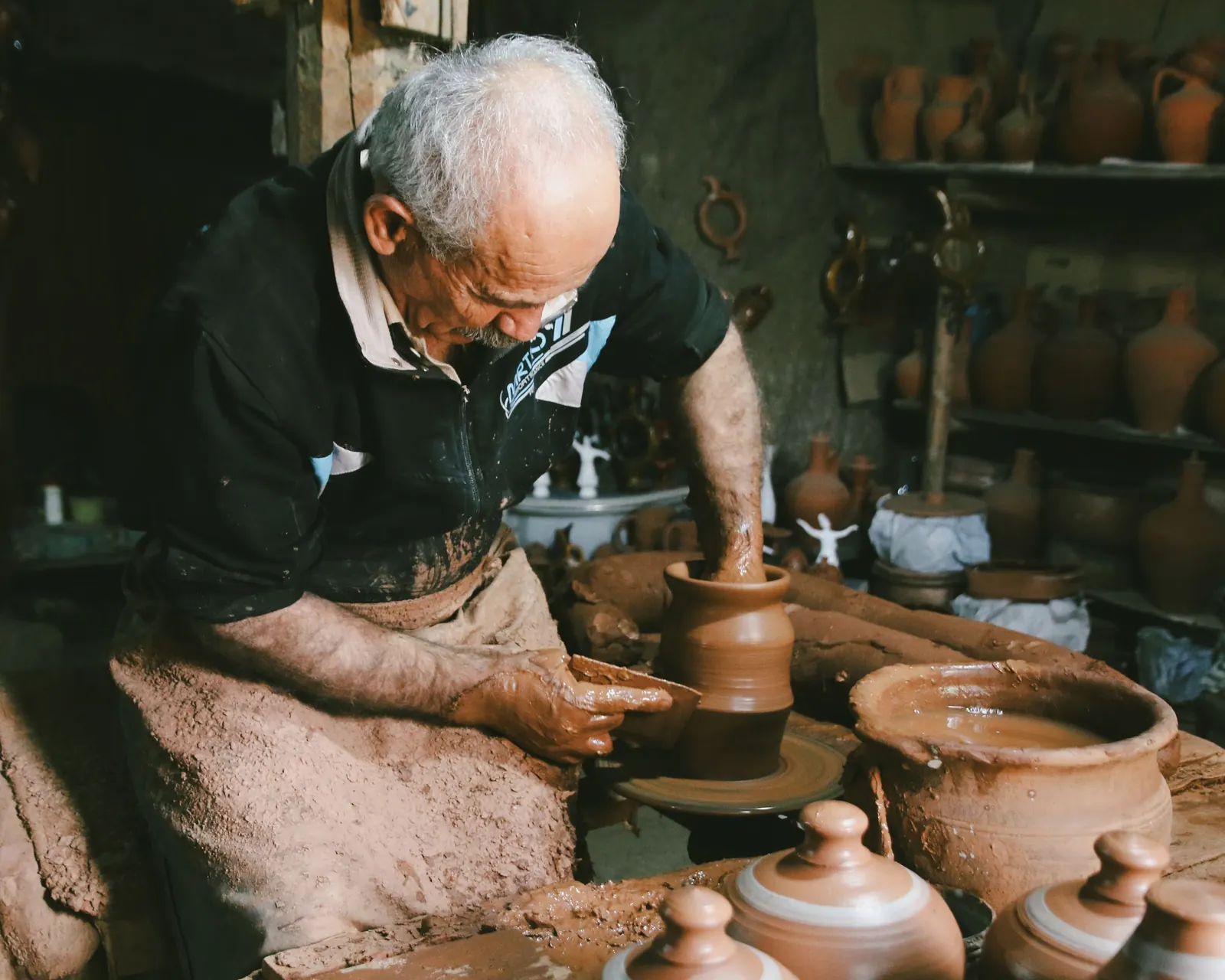
The space
A ground-floor workshop with tall windows, six wheels, a hand-building table, a glaze room and two electric kilns.
The studio was started by a potter who spent ten years teaching before opening the doors. She still throws most of what's on the shelf.
What we use
Our everyday clay: forgiving on the wheel and strong once fired.
For thin cups and translucent bowls. Beautiful and unforgiving.
Mixed in the studio and tested on every clay.