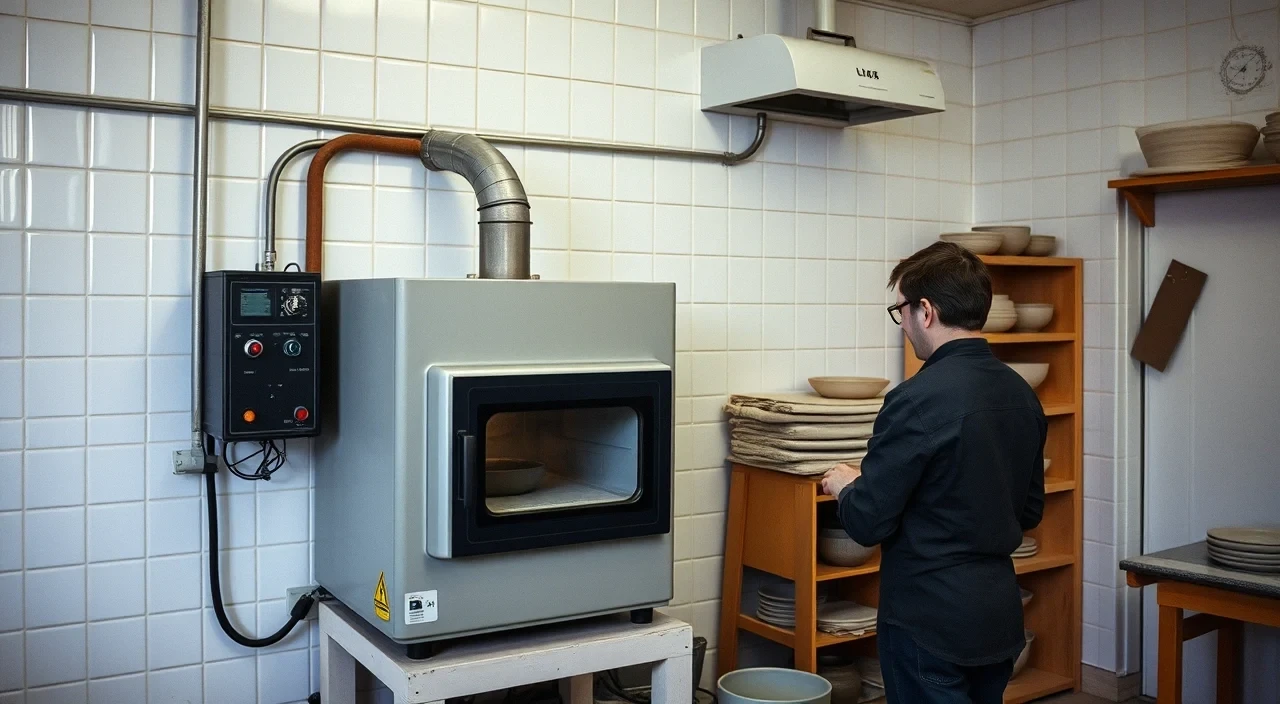
Choosing the right safety equipment for home pottery firing requires a combination of high-heat ventilation, certified electrical or gas connections, and fire-suppression tools. In Porto, safety also means adhering to Decree-Law 97/2017 for gas and Decree-Law 96/2017 for electricity to ensure your setup is legally defensible and physically secure.
Essential Safety Components
Active extraction to remove toxic fumes and heat.
Dedicated circuits avoiding household extension leads.
Proper extinguishers and emergency shut-off valves.
Non-combustible buffers around the kiln exterior.
What electrical equipment do I need for a home kiln?
A home kiln requires a dedicated high-amperage circuit installed by a certified electrician to prevent overheating and fire. You must avoid extension leads or undersized wiring, as the constant high draw of a pottery kiln can melt standard household cables and cause electrical fires.
In Porto, electrical installations are governed by Decree-Law 96/2017. This means your setup should undergo inspections covering Type A and Type C installations to ensure the load is handled safely. A professional electrician will provide the necessary documentation to prove the circuit is grounded and rated for the kiln's specific wattage.
Common mistakes include plugging a kiln into a multi-socket adapter or using a circuit shared with other heavy appliances. This often leads to tripped breakers or, in worst cases, structural fires. To maintain a safe environment, keep a checklist of these requirements:
- Dedicated circuit breaker for the kiln
- Heavy-duty cabling rated for the kiln's peak temperature
- Verified grounding to prevent electric shock
- Professional installation certificate for insurance purposes
Gas Safety Essentials
Automatic gas shut-off if the flame goes out.
Propane cylinders kept outside the home.
Valid certificates from accredited entities.
How do I safely install a gas kiln at home?
Installing a gas kiln requires an authorized installing entity to perform the work and issue a responsibility certificate. You must ensure the kiln has a safety device that cuts the gas supply if the flame fails, and all propane cylinders must be stored outside the home or basement.
Portuguese law (Decree-Law 97/2017) mandates that gas installations undergo initial, periodic, and extraordinary inspections by accredited entities. Using a gas oven for purposes other than those specified by the manufacturer is prohibited and dangerous. If you suspect a leak, immediately shut off the supply, avoid using electrical switches or open flames, and contact your supplier.
Proper ventilation is non-negotiable for gas firing. Without a dedicated exhaust system, carbon monoxide can accumulate rapidly in garages or balconies. Ensure your setup includes:
- Authorized installation and leak checks
- Flame-failure protection devices
- Proper ventilation to exhaust combustion gases
- Valid inspection records from an accredited body
Do I need fire-service approval for a home kiln?
Whether you need approval depends on the building's risk category and whether the activity is private or commercial. For mainland Portugal, building fire-safety compliance is handled by ANEPC for risk categories 2–4, while municipalities manage category 1 buildings.
If you transition from a hobby to a commercial pottery activity, you may fall under Portugal’s Industrial Licensing System. Type 3 establishments generally require a simple prior notification and a declaration of compliance. This ensures that your space can safely handle the heat and potential risks associated with industrial-scale firing.
To stay compliant, maintain a file of evidence including electrical inspection records, gas certificates, and the kiln manufacturer's documentation. This is critical if a fire inspector visits or if you need to file an insurance claim. Consider these safety layers:
- A suitable fire extinguisher placed beside the kiln
- A smoke alarm and carbon monoxide detector
- Emergency shut-off access for gas and power
- A clear, non-combustible floor surface
What ventilation is needed for electric and gas kilns?
Both electric and gas kilns require active ventilation to remove toxic fumes, such as sulfur dioxide and carbon monoxide, which are released during the firing process. A simple open window is rarely sufficient; a dedicated vent hood or extraction fan is necessary to maintain air quality.
In an apartment or garage setting in Porto, the risk of fume accumulation is higher. Electric kilns release fumes during the burnout of organic materials and the volatilization of metals in glazes. Gas kilns produce combustion byproducts that can be lethal if trapped in a confined space.
When choosing ventilation, consider the airflow capacity and the proximity of the exhaust to other residential windows. Proper ventilation prevents the buildup of heat that can damage the surrounding building structure. Key considerations include:
- Mechanical extraction fans rated for high temperatures
- Proper ducting to vent fumes entirely outside
- Regular cleaning of vents to prevent lint or dust buildup
- Monitoring air quality with sensors
Visit Our Studio
If you prefer firing in a professional environment, visit Kaolin Ceramics Studio in Porto.
Frequently asked questions
Can I install a pottery kiln in an apartment in Porto?
It is possible, but highly dependent on your building's electrical capacity and ventilation. You must ensure the installation follows Decree-Law 96/2017 and that you have the landlord's and municipality's permission regarding fire safety.
What fire extinguisher should I keep beside a pottery kiln?
While the specific type depends on your fuel source (electric vs. gas), you should always have a rated extinguisher and a clear emergency shut-off path. Consult ANEPC guidelines for your building's specific risk category.
Do I need an electrician or gas technician to connect my kiln?
Yes. In Portugal, gas repairs and installations must be done by an authorized entity to receive a responsibility certificate. Electrical work for high-draw appliances should be verified by a professional to meet safety standards.