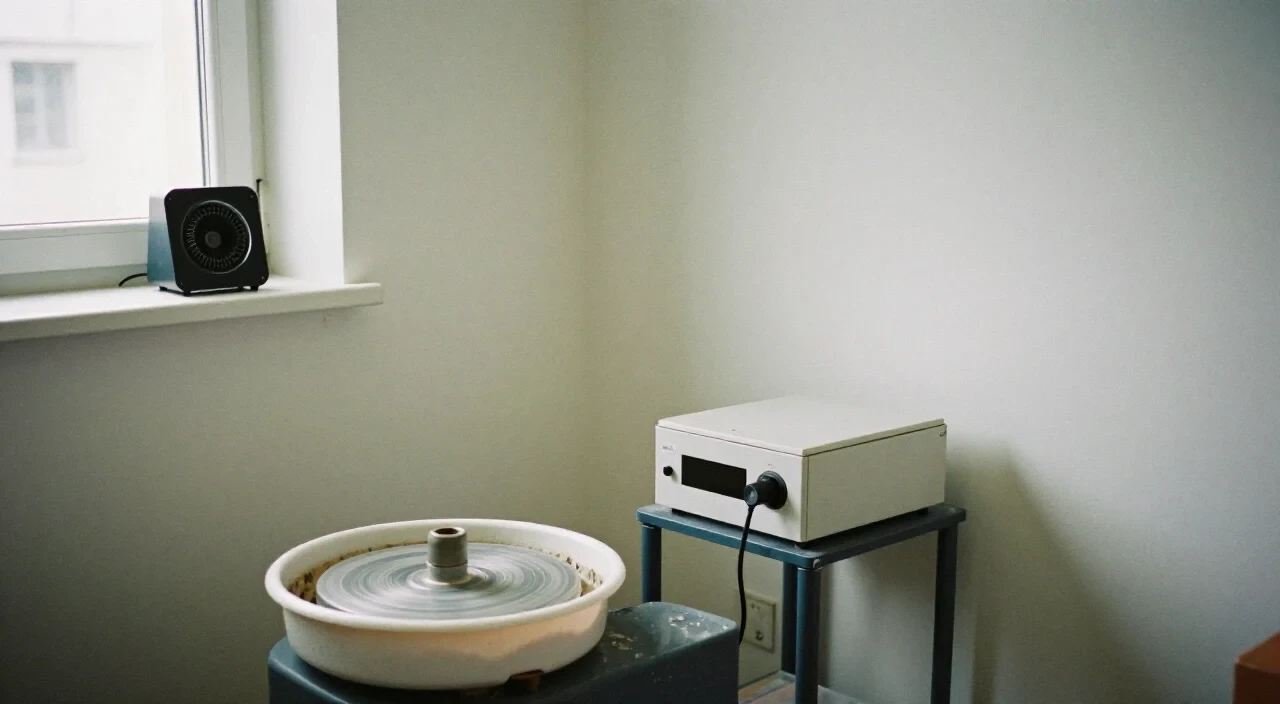
Yes – a small apartment can become a fully functional pottery *studio space* if you respect local regulations, choose compact equipment, install proper ventilation, and manage noise. The process involves checking the property’s classification, notifying the municipality, and arranging reversible, renter-friendly setups.
Table of Contents
- 01Can I legally set up a pottery studio in a rented apartment in Porto?
- 02What equipment fits a limited-room apartment studio and how to install it safely?
- 03How do I ventilate a kiln and control clay dust in a small space?
- 04How can I keep noise low and stay within Porto’s special noise licence rules?
- 05Frequently asked questions
- 06Sources
- 07Read next
Key takeaways
- Check property classification and file a start-of-works notice.
- Choose low-profile wheels and a small electric kiln.
- Install a dedicated exhaust vent or use a portable extractor.
- Apply for Porto’s special noise licence if needed.
- Design the layout to be reversible for rental agreements.
Can I legally set up a pottery studio in a rented apartment in Porto?
Yes, but you must notify the municipality, respect noise limits and avoid structural changes. Interior alterations that do not affect load-bearing walls or façades are exempt from planning control, yet an “informação de início de trabalhos de operações urbanísticas” is still required.
First, confirm the building is not classified as a protected or classified property. Then submit the start-of-works notification through Porto’s online portal or by calling +351 220 100 220. The municipality will confirm whether a building licence is needed; it usually is for extensions, new openings or permanent installations.
Noise-producing machinery, such as a pottery wheel, may need a special noise licence if it exceeds the General Noise Regulation limits or operates outside permitted hours (08:00-20:00 on weekdays). Without the licence, activities after 20:00 are prohibited.
If the lease forbids alterations, design all installations to be reversible: use freestanding tables, portable kilns on wheels, and non-permanent brackets for venting. Kaolin Ceramics Studio often advises renters to keep the setup modular so it can be removed when the tenancy ends.
Common mistake: assuming “no prior planning control” means no paperwork. Skipping the start-of-works notice can lead to fines and forced removal of equipment.
What equipment fits a limited-room apartment studio and how to install it safely?
Compact wheels, a tabletop electric kiln, and modular work surfaces are the best choices for a small studio space. They require less floor area, lower power draw, and are easier to vent.
Kaolin’s open studio uses six standard wheels and a medium-size kiln that fires weekly. For an apartment, consider a single low-profile wheel (around 60 cm diameter) and a kiln no larger than 60 × 60 cm, which can sit on a sturdy, heat-resistant table.
Installation steps:
- Verify the apartment’s electrical circuit can handle the kiln’s wattage (usually 3 kW). Use a dedicated 20 A circuit with a residual-current device.
- Keep a minimum clearance of 30 cm from walls and combustible materials, as required by most kiln manufacturers.
- Place the kiln on a fire-rated mat and secure it to prevent tipping.
- Use a portable, low-noise wheel that runs on a quiet motor; models with rubber isolation pads reduce vibration transmission.
If the floor cannot support the kiln’s weight, place it on a reinforced wooden platform. Always follow the manufacturer’s installation guide – skipping it is a frequent source of fire hazards.
Common mistake: loading the kiln beyond its rated capacity, which can cause overheating and trigger the building’s fire alarm.
How do I ventilate a kiln and control clay dust in a small space?
A dedicated exhaust system and wet-cleaning methods keep air quality safe and prevent dust from spreading throughout the apartment.
Ventilation can be achieved with a portable extractor that directs hot gases through a window or balcony. Install a flexible duct with a heat-resistant sleeve, ensuring the outlet is at least 1 m above floor level to avoid re-circulation.
If a permanent vent is impossible, use a certified portable kiln exhaust kit that includes a charcoal filter for odor control. Position the exhaust near an open window and seal gaps with magnetic strips to maintain heat flow.
Clay dust control:
- Wet-sieve clay before use to reduce airborne particles.
- Sweep only with a damp cloth; dry sweeping lifts dust into the air.
- Place a small shop-vac equipped with a HEPA filter in the work area for quick clean-ups.
Kaolin’s workshops demonstrate these practices in real time: participants learn to wipe tools with a damp sponge and to use a wet-cleaning station before moving between the wheel and the glaze area.
Common mistake: relying on ordinary kitchen fans, which lack the temperature rating and airflow needed for kiln exhaust.
How can I keep noise low and stay within Porto’s special noise licence rules?
Choose low-decibel wheels, add vibration isolation, and schedule work within permitted hours to avoid needing a special noise licence.
Porto restricts noisy activities between 20:00 and 08:00 on weekdays unless a special licence is granted. Most residential pottery wheels emit 55-65 dB at the source, which can exceed the limit after wall transmission.
Noise-reduction steps:
- Mount the wheel on a rubber-filled base or a heavy wooden slab to dampen vibrations.
- Use ear-plugs or a small acoustic enclosure (a portable sound-absorbing panel) around the wheel during use.
- Limit wheel sessions to 2-hour blocks and keep them between 09:00-19:00.
- Communicate with neighbours; a brief notice about workshop times can reduce complaints.
If you plan to run evening classes, apply for Porto’s special noise licence in advance. The application requires a noise impact study and proof of mitigation measures.
Common mistake: installing a high-power electric wheel without checking its sound level, leading to neighbour disputes and possible licence denial.
Practical tip: Before buying a kiln, run a load test on the apartment’s electrical circuit with a portable heater of similar wattage. This reveals whether the wiring can sustain the kiln’s demand without overloading the breaker.
Frequently asked questions
Can I install a pottery kiln in an apartment?
Yes, provided the electrical circuit can handle the kiln’s power, there is adequate clearance, and a proper exhaust system is installed. Municipal notification and, if needed, a noise licence are also required.
What is the quietest pottery wheel for an apartment?
Low-profile wheels with rubber isolation pads and brushless motors are the quietest. Models that stay below 60 dB at the source are best for shared walls.
How do I prevent clay dust from spreading through my home?
Use wet-sieving, damp cloths for cleaning, and a HEPA-rated shop-vac. Avoid dry sweeping and keep the work area sealed with magnetic door strips when possible.
Can I teach pottery workshops from my apartment in Porto?
Workshops are allowed if they respect the 08:00-20:00 noise window, the space meets fire-safety standards, and the landlord consents. For evening sessions, apply for a special noise licence.