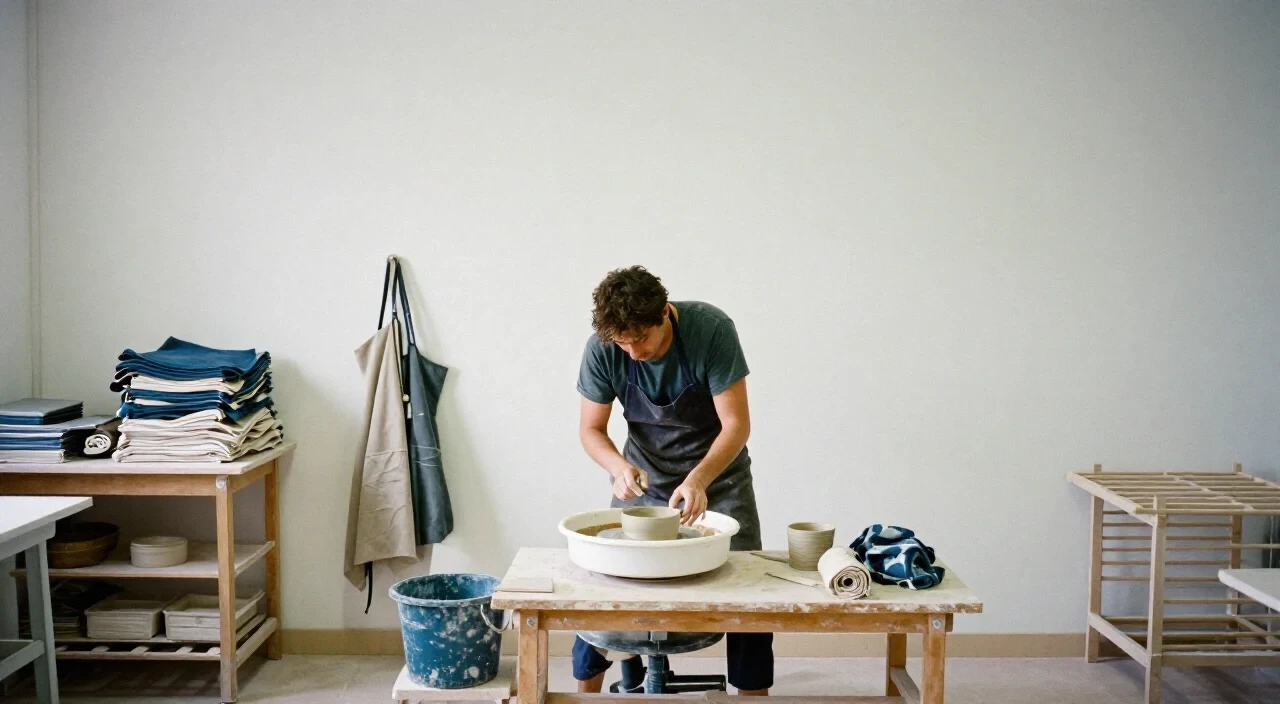
Preparing for a pottery workshop in Portugal is simple: choose a beginner-friendly class, check what materials and firing are included, dress comfortably, confirm booking deadlines, and plan for the 2-3 week kiln cycle. At Kaolin Ceramics Studio in Porto, the process is clearly outlined for first-time students.
Key takeaways (in the article's language)
- Pick a workshop that matches your interest (wheel or handbuilding)
- Check price inclusions: clay, tools, glazing, firing
- Bring comfortable, washable clothing and closed-toe shoes
- Allow 2–3 weeks for the final glaze firing
What should I bring and wear to my first pottery workshop in Portugal?
Comfortable, washable clothing and closed-toe shoes are essential; avoid jewelry that can snag in wet clay. Bring a water bottle, a small towel, and a positive attitude. Most studios, including Kaolin, provide all clay, tools, and protective aprons for the session.
Porto studios keep the environment tidy but messy by nature. Opt for a t-shirt or long-sleeve shirt you don’t mind staining, and jeans or sturdy trousers. Slip-on shoes protect your feet from dropped tools and keep the studio floor clean. A small towel helps wipe excess water, while a reusable bottle keeps you hydrated during the 2-hour wheel taster or longer courses.
Kaolin Ceramics Studio supplies a reusable apron, a selection of stoneware clay, and all necessary hand tools. Participants are asked to leave valuables at home, as the work area is shared and occasionally wet. If you have limited hand mobility, call ahead; the studio’s layout includes adjustable seating and easy-access sinks.
Checklist before you arrive:
- Wear comfortable, washable clothing
- Bring closed-toe shoes
- Pack a water bottle and a small towel
- Leave valuables at home
- Notify the studio of any accessibility needs
How do I choose the right beginner pottery workshop and understand the costs?
Compare the format (wheel throwing vs handbuilding), duration, group size, and what’s included in the price. In Porto, beginner sessions range from €35 to €75; Kaolin’s wheel taster costs €45 for two hours, while a six-week course is €240 and covers all materials and firing.
First, decide whether you prefer the tactile freedom of handbuilding or the kinetic challenge of the wheel. Wheel sessions, like Kaolin’s 2-hour taster, let newcomers feel the momentum of shaping a cylinder. Handbuilding workshops often focus on pinch, coil, or slab techniques and may be offered by other local studios.
Next, look at the group size. Smaller groups (up to six people) give more individual guidance, which is typical of Kaolin’s beginner courses. Larger classes can be cheaper but may limit hands-on time with the instructor.
Price transparency matters. Verify that the fee includes clay, tools, glaze, and at least one bisque and glaze firing. Kaolin’s six-week beginner course (€240) bundles everything, while a one-off wheel taster (€45) includes materials for that session only. Some providers charge separately for firing, so always ask.
Finally, check the schedule. Kaolin operates Wed-Fri 11:00-18:00 and Sat 10:00-17:00, offering flexibility for locals and tourists alike. Align the workshop dates with your travel plans to avoid missing the final collection.
Decision checklist:
- Wheel or handbuilding?
- Desired duration (single session vs multi-week course)
- Group size preference
- All-inclusive price vs extra firing fees
- Studio opening hours that fit your itinerary
Tip: Expect a 2–3 week waiting period for glaze firing; arrange collection or shipping before you leave Porto.
What is the typical process from shaping to finished piece, and why isn’t the work ready the same day?
A pottery workshop usually covers clay preparation, shaping (throwing or handbuilding), trimming, bisque firing, glazing, and a final glaze firing. Because the kiln cycle takes 2–3 weeks, participants leave the studio with unfired pieces that are returned once the glaze firing is complete.
The first step is clay preparation: the studio wedges the raw clay to remove air bubbles. During a wheel taster at Kaolin, the instructor demonstrates how to center a ball of clay on the wheel, then pull up walls to form a cup or bowl. Handbuilding classes start with a soft slab that is rolled, cut, and joined.
After shaping, trimming refines the vessel’s foot and removes excess material. The piece then dries to a leather-hard state, ready for its first firing—called bisque firing—which turns the clay into a porous, sturdy body.
Once bisque-fired, the work is glazed. Glaze is a liquid glass that fuses to the surface during the glaze firing. This second heat cycle is longer and requires careful temperature control, which is why studios fire batches once a week. Kaolin’s kiln runs weekly, meaning a piece started on a Monday may not be ready until the following Thursday, two to three weeks later.
Because the firing cannot be rushed, the workshop day ends with a green (unfired) piece. The studio records your name and contact details, then notifies you when the glazed work is ready for pickup. If you are traveling, ask the studio about international shipping options; many Porto studios, including Kaolin, can arrange secure packaging and courier service.
Process snapshot:
- Wedging and preparation of clay
- Shaping (wheel or handbuilding)
- Trimming and drying to leather-hard
- Bisque firing (first kiln run)
- Glazing the bisque piece
- Final glaze firing (2–3 weeks total)
- Collection or shipping of the finished item
How do booking deadlines and collection or shipping work for tourists?
Booking windows vary; some Porto studios close registrations 150 hours before the class, others only 12 hours ahead. After firing, finished pieces are usually ready in 2–3 weeks and can be collected in person or shipped internationally for you.
When you decide on a workshop, check the provider’s cancellation and booking policy. Kaolin requires a reservation at least 24 hours before the session, but other local studios may lock in spots up to a week ahead. The earlier you book, the easier it is to secure a place in a small-group class.
After the workshop, the piece enters the kiln schedule. Kaolin fires its kiln weekly, so a piece typically finishes within two to three weeks after the initial class. The studio will contact you by phone or email when the glaze firing is done.
If you are still in Portugal, you can pick up the finished work during regular opening hours (Wed-Fri 11:00-18:00, Sat 10:00-17:00). For visitors departing earlier, ask the studio about international shipping. Kaolin can pack the glazed item in bubble-wrap and arrange courier delivery to most countries; shipping costs are calculated separately.
Key points for tourists:
- Verify the exact booking deadline for your chosen class
- Note the expected 2–3 week firing window
- Decide whether you’ll collect in person or need shipping
- Provide a reliable contact number for the studio’s notification
- Confirm any extra fees for packaging and courier service
Frequently asked questions (in the article's language)
Do I need any prior experience to join a pottery workshop at Kaolin?
No prior experience is required. Kaolin’s wheel taster and six-week beginner course are designed for absolute beginners and include all materials, instruction, and firing.
Can children participate in beginner workshops in Porto?
Yes. Some local studios accept participants from age 7, and Kaolin welcomes curious youngsters for supervised sessions, especially during the open studio hours.
How can I receive my finished pieces if I leave Portugal before the kiln cycle ends?
Ask the studio about international shipping when you book. Kaolin can securely package glazed items and send them via courier; shipping costs are handled separately from the workshop fee.