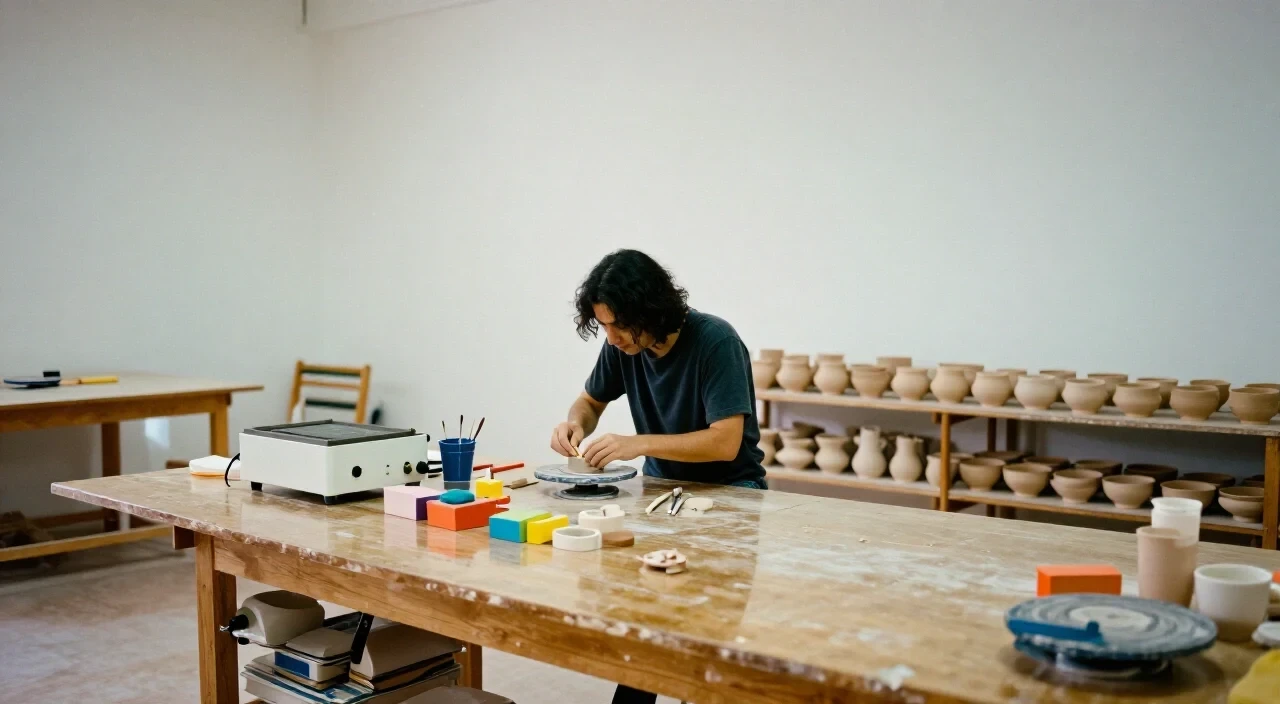
Creating a pottery curriculum for kids in Portugal means defining clear age brackets, securing written parental consent, selecting non-toxic clay and glazes, limiting each instructor to a safe number of participants, and establishing proper waste-disposal and fire-safety procedures—all within a structured sequence of hand-building, wheel work, glazing, drying and firing.
Table of Contents
- 01What age groups are suitable for a kids pottery curriculum in Portugal?
- 02How should parental consent and safeguarding be handled for child pottery workshops?
- 03Which clay, glazes and kiln practices are safe for beginner kids?
- 04How should the lesson sequence and waste management be organised for a kids pottery workshop in Porto?
- 05Frequently asked questions
- 06Sources
- 07Read next
Key takeaways
- Define clear age brackets for activities
- Secure written parental consent for every child
- Limit class size to ensure safe supervision
- Use non-toxic clay, glazes and follow waste-disposal rules
What age groups are suitable for a kids pottery curriculum in Portugal?
In Portugal the practical split is: toddlers (under 3) are usually excluded; primary-school children (6-12) work best with hand-building; early teens (13-15) can start simple wheel work; older teens (16-18) may handle full firing cycles.
Porto studios typically follow the same age logic because supervision needs increase with skill complexity. For 6-9 year olds, focus on pinch pots, coil building and basic surface decoration; keep tools large and easy to grip. Ages 10-12 can add slab construction and introduction to simple glaze washes. Once a child reaches 13, the studio may allow supervised use of the pottery wheel under a qualified instructor, but still limit the turning speed and require constant adult hands-on. Teens 16 and older can participate in the full production cycle, including loading the kiln, provided they have completed a safety briefing and a written acknowledgment of fire-risk procedures. Adjust the curriculum length to match attention span: 45-60 minutes for younger groups, up to 90 minutes for older teens.
Common mistake: treating one curriculum as a one-size-fits-all. Tailor activities to developmental abilities and always respect the age thresholds set by the studio operator.
When in doubt, consult a local child-safety specialist or the municipal cultural department for guidance on age-appropriate programming.
How should parental consent and safeguarding be handled for child pottery workshops?
Portuguese law does not prescribe a specific consent form for in-person workshops, but best practice is to obtain a signed parental authorization that covers attendance, emergency contacts, medical information and photography permission.
The consent document should be dated, include the child’s full name, date of birth, and a clear description of the activities (hand-building, wheel use, kiln firing). Add check-boxes for known allergies, special needs and a clause allowing the studio to act in an emergency. Keep a copy on file for the duration of the programme and another copy with the child’s belongings during each session.
Safeguarding also involves staff training. Kaolin Ceramics Studio, like other professional studios in Porto, trains its instructors in occupational safety, fire prevention and basic first-aid. Record the training dates and keep them available for inspection. Limit the adult-to-child ratio to no more than one instructor for every five beginners; for wheel work, add an assistant to monitor hand placement.
A practical checklist:
- Prepare a consent form that meets GDPR requirements.
- Collect emergency phone numbers and allergy information.
- Store the forms securely in a locked cabinet.
- Review the forms before each class.
- Ensure at least one qualified adult is present for every five children.
- Conduct a brief safety briefing at the start of each session.
Mistake to avoid: assuming a draft online-service law applies to physical workshops. The draft law 398/XVII/1a only regulates digital platforms, not hands-on studio classes.
If a parent cannot attend, a written collection permission signed by both parents is advisable, mirroring the practice of many Porto activity providers.
Which clay, glazes and kiln practices are safe for beginner kids?
Choose low-fire, non-toxic clay bodies (earthenware) and water-based, lead-free glazes that are labeled safe for children; avoid high-temperature stoneware unless the kiln is operated exclusively by trained staff.
For 6-12 year olds, a stone-free earthenware clay that dries quickly reduces handling time and limits exposure to dust. Store clay in sealed containers and provide disposable gloves if the child has skin sensitivities. Glazes should be applied with brushes or sponges, never with spray equipment, and should be fully cured at 1000 °C – a temperature reachable in most community kilns.
Kiln safety is paramount. Children must never load or unload the kiln; this task belongs to a qualified instructor who has completed fire-prevention training. The studio should keep a logbook of each firing, noting temperature ramps, soak times and any incidents. After firing, allow the kiln to cool completely before anyone touches the work. Provide a clear visual cue (e.g., a red-green indicator) that the kiln is hot.
Best-practice checklist:
- Use earthenware clay with a water content of 30-35%.
- Select glazes certified as lead-free and cadmium-free.
- Store all raw materials in a designated, labeled area.
- Keep a fire-extinguisher rated for Class A fires within arm’s reach.
- Record every firing in a logbook, including temperature and duration.
- Prohibit children from entering the kiln room during a firing cycle.
Common mistake: letting children handle glaze powders directly. Always pre-mix glazes in a well-ventilated area and provide only the ready-to-apply liquid.
When the studio plans to introduce high-fire stoneware, schedule a separate adult-only session and update the consent form accordingly.
How should the lesson sequence and waste management be organised for a kids pottery workshop in Porto?
A coherent curriculum moves from hand-building basics to drying, glazing and firing, interspersed with short safety pauses; waste must be separated, stored and sent to an authorised waste operator as R12 recyclable material.
Week 1–2: Introduction to clay, basic pinch pots and coil building. End each session with a 10-minute clean-up where children learn to scrape excess clay into a designated bin. Week 3–4: Simple slab construction and surface decoration using safe brushes. Introduce the concept of drying stages (leather-hard, bone-dry) and mark the progress on a shared chart.
Week 5–6: Controlled glaze application. Demonstrate how to dip or brush glaze, emphasizing that glazes are not edible and must stay away from food-preparation areas. Collect glaze runoff in a sealed container for later disposal.
Week 7–8: Firing overview. Show the kiln from a safe distance, explain the heating schedule, and let children observe the temperature readout on a digital display. After firing, guide them in handling cooled pieces with tongs.
Waste-handling protocol for Porto studios:
- Separate wet clay scraps, dry clay dust and glaze residues.
- Store wet scraps in a covered tray labeled “Clay Waste – R12”.
- Transfer the tray weekly to a licensed waste-recovery service that processes ceramics.
- Record the waste transfer in a logbook, noting date, quantity and operator details.
- Dispose of packaging (paper, cardboard) in regular recycling.
Mistake to avoid: mixing clay waste with general trash, which is illegal under Portuguese environmental regulations. Proper documentation protects the studio and teaches children responsibility.
If the workshop runs off-site (e.g., a school field trip), obtain additional written consent for transport, mirroring Montessori Porto’s 2026/27 policy on child outings.
Always test a small batch of any new glaze in the kiln before allowing children to use it; a single failed firing can expose the whole class to hazardous fumes.
Frequently asked questions
What age is best for a children’s pottery curriculum?
A safe start is at six years old for hand-building; wheel work can be introduced from thirteen with close supervision.
Do children need parental consent for pottery workshops in Portugal?
Yes. Written consent covering attendance, medical information and photography rights is best practice, even though no specific law mandates it for in-person classes.
How many children should one pottery teacher supervise?
A maximum of five beginner children per instructor is recommended; add an assistant when wheel work or kiln loading is involved.