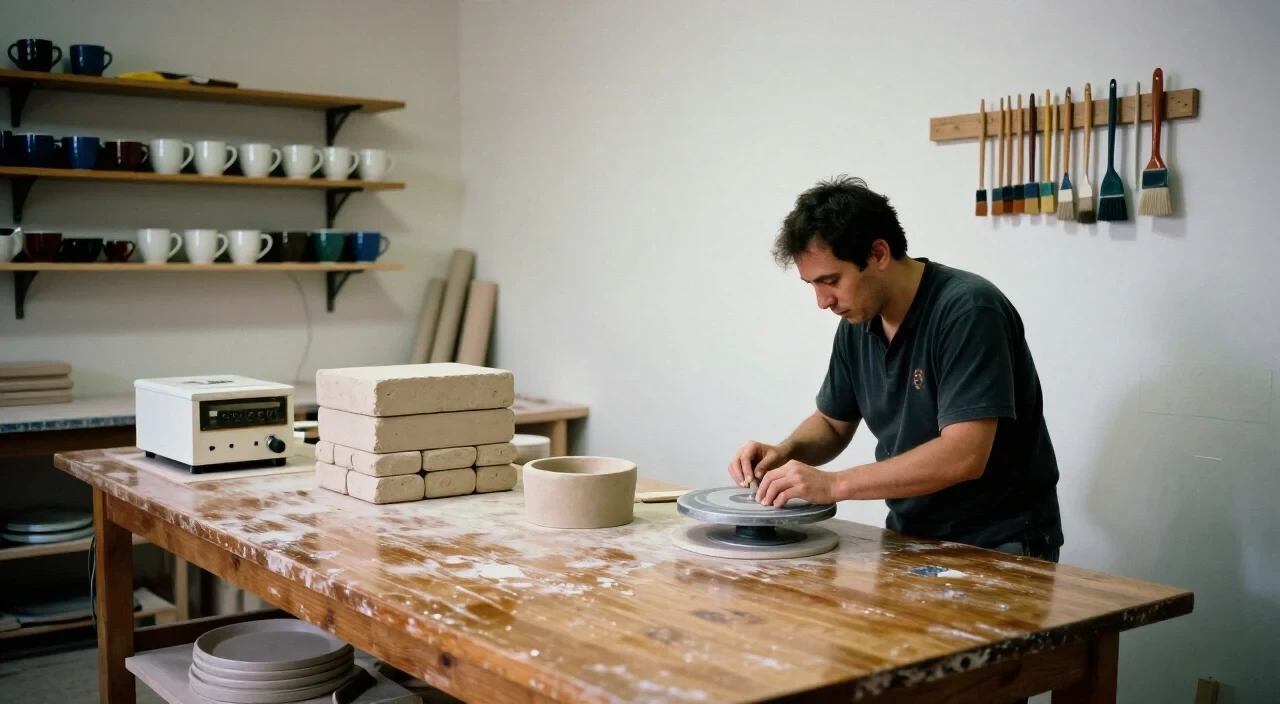
Pricing handmade pottery requires adding the cost of materials, labour, kiln depreciation, overhead, taxes, and any extra services such as glazing, shipping or workshop fees, then applying a margin that reflects market demand and your desired profit. The result is a competitive rate that covers costs and earns a sustainable income.
Table of Contents
Key takeaways
- Calculate a full per-piece cost sheet, including failed firings.
- Separate charges for glazing, extra clay and shipping.
- Use local workshop price bands in Porto as reference points.
- Add a profit margin that covers taxes and desired earnings.
How do I calculate the cost of handmade pottery?
To calculate the cost of a piece, add the price of raw clay, glaze, the portion of kiln electricity used, a labour charge for shaping and finishing, plus a share of rent, utilities and packaging. The sum becomes the break-even price before profit.
First list every direct expense. Clay typically costs €0.10-€0.15 per kilogram in Porto; a standard mug uses about 0.8 kg, so material is €0.08-€0.12. Glaze adds roughly €0.05 per piece. Kiln electricity varies, but a safe estimate is €0.02-€0.04 per firing hour per item.
Next allocate overhead. Divide monthly rent, water and electricity by the number of pieces you expect to produce each month. If the studio rent is €500 and you fire 200 pots, the overhead per pot is €2.50. Add a labour rate – many Portuguese potters charge €12-€18 per hour; estimate the time spent shaping, trimming and finishing, then multiply.
Finally, include packaging and unavoidable loss. Broken or warped pieces are common; allocate a 5-10 % loss factor to the total cost. The resulting figure is your break-even cost, ready for a margin.
- Clay & glaze cost per kg
- Kiln electricity per hour
- Share of rent & utilities
- Labour hours × hourly rate
- Packaging & breakage allowance
What hourly rate should a potter charge for labour?
A fair hourly rate balances the skill level of the potter, local cost of living and the price expectations of Porto customers; €12-€18 per hour is typical for studio work, while specialised wheel instruction may command €20-€30 per hour.
Start by researching local wages for comparable creative work. The Portuguese minimum wage is around €760 per month; a full-time artisan often aims for at least double that to cover benefits and taxes. Divide the target monthly income by expected billable hours (usually 120-140 hours after accounting for breaks and admin) to arrive at an hourly figure.
Adjust for expertise. A potter with years of wheel experience and teaching credentials can justify the higher end of the range. Conversely, beginners may start at the lower bound while they build a portfolio.
In a workshop setting, the hourly rate also includes preparation time – setting up the wheel, cleaning, and post-class follow-up. If a 2-hour wheel class costs €43 for participants, the studio is already covering material and firing; the remaining amount should reflect the instructor’s labour.
- Minimum local wage × 2 = baseline
- Billable hours per month ≈ 120-140
- Skill premium adds €2-€10 per hour
- Include prep and cleanup time
How should glazing, firing and shipping be priced?
Glazing, firing and shipping are separate cost centres that should be itemised; a base price can include standard glaze and one firing, while upgrades and delivery are added as optional line items.
Glaze is often priced by weight. In Porto, a provider charges €10 per kilogram of extra clay; glaze follows a similar model, typically €8-€12 per kilogram. Estimate the amount needed per piece (0.1-0.2 kg) and add that to the cost sheet.
Firing costs depend on kiln capacity and electricity rates. A three-hour firing for a small batch may be €1-€2 per piece. If you offer a “full glaze and fire” ticket, embed this cost into the class fee; otherwise list it as €5-€8 per item for individual orders.
Shipping is a variable expense. European delivery from Porto averages €15, but weight and distance affect the final price. Offer a flat rate for standard parcels and a calculated quote for larger shipments. Clearly state that the buyer covers shipping unless a promotional free-shipping threshold is met.
- Glaze: €8-€12/kg → €0.80-€2.40 per piece
- Firing: €1-€2 per piece for a standard cycle
- Shipping: €15 flat for EU, tiered for heavier items
Track every failed firing. Even a 5 % loss rate adds up quickly and can turn a profitable price into a loss. Record the number of pieces that crack, warp or glaze unevenly, then spread that cost across your successful inventory.
How can I set competitive rates that reflect the Porto market?
Competitive rates align with local workshop price bands while allowing a margin; compare your cost-plus price to the typical €35-€75 range for classes and the €13-€46 range for finished tiles, adjusting for inclusions like materials and firing.
Map the market. Porto studio listings show family classes at €35 for 2.5 hours, wheel classes at €43-€75 for 2-3 hours, and tile-painting experiences from €13-€46. Tourist-focused experiences can be higher, up to US$70, but they often bundle drinks, souvenirs and guide services.
Determine what you include. If your price covers clay, glazing, firing and a single collection, position it near the €45 single-wheel session seen locally. If you add extra clay or premium glazes, list them separately as €10 per kilogram or €5 for a glaze upgrade.
Apply a profit margin of 20-30 % on top of the break-even cost. For a mug that costs €8 to produce, a 25 % margin yields a selling price of €10. If the market expects €12-€15 for a hand-painted mug, you have room to increase the margin or add value (e.g., a gift box).
Test and adjust. Offer a limited run at a slightly lower price to gauge demand, then refine based on sales velocity and feedback. Keep a spreadsheet of each product line, noting the final price, cost breakdown and profit margin.
- Benchmark against local class fees
- Define what’s included in each price
- Add 20-30 % profit margin
- Review sales data and tweak regularly
Frequently asked questions
Should pottery prices include VAT?
In Portugal, VAT (23 %) must be added to the final invoice unless the buyer is a tax-exempt business. Display the net price and clearly state that VAT is applied at checkout.
How much should I charge for a handmade mug?
Calculate material (€0.10-€0.15), labour (≈ €3-€5 for shaping and finishing), glaze and firing (€2-€3), then add overhead and a 25 % margin. Most Porto studios price a finished mug between €12 and €18.
What is the best way to handle price changes for repeat customers?
Communicate any adjustment in advance, explaining the reasons (rising material costs, new glaze, etc.). Offer loyal clients a small discount or a fixed-price package to maintain goodwill while preserving your margin.