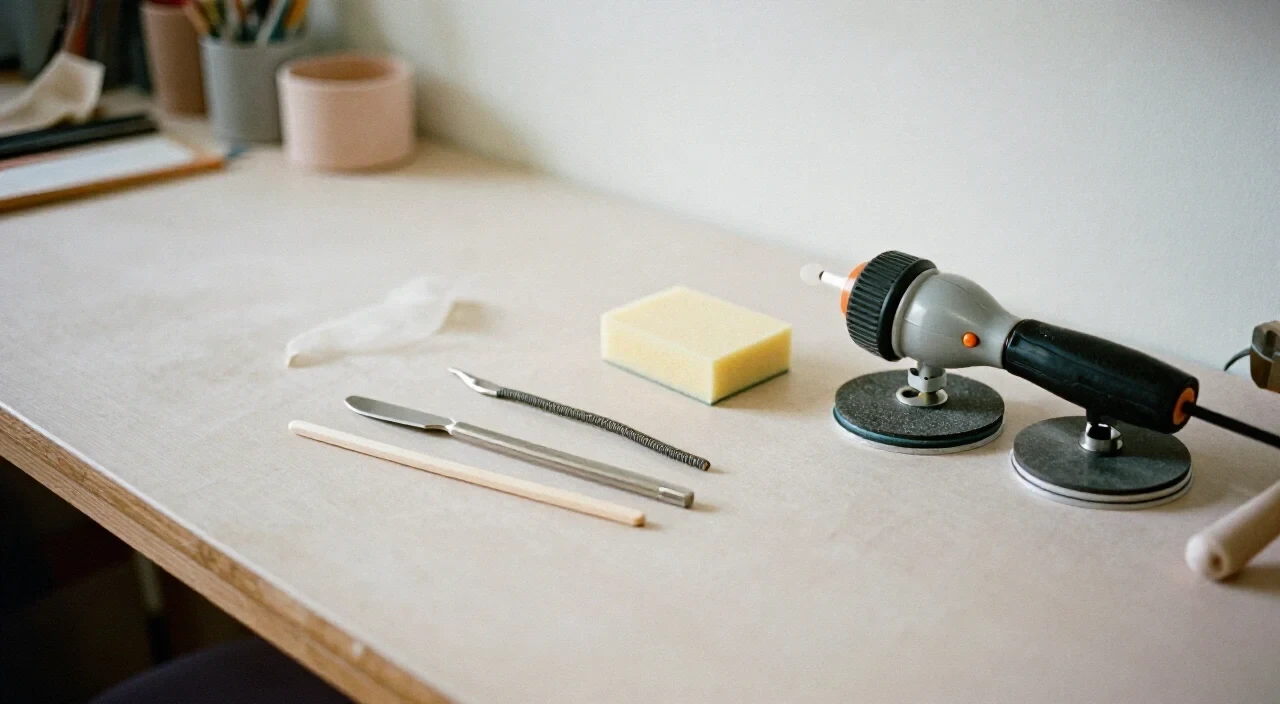
The best pottery tools for sculpting ceramic figurines on a budget are a set of stainless steel carving knives, a wooden modeling tool, a flexible ribbon tool, a sponge, and a small rotary tool with sanding discs. These items give control, detail, and durability without high cost.
Table of Contents
Key takeaways
- Stainless-steel carving knives provide precise cuts
- Wooden modeling sticks are cheap and versatile
- Flexible ribbon tools smooth curves without splintering
- A small rotary tool adds fine detail on a budget
What essential tools are needed to sculpt ceramic figurines on a budget?
A basic budget kit includes stainless-steel carving knives for fine cuts, a wooden modeling stick for shaping, a flexible ribbon tool for smooth surfaces, a natural sponge for texture, and a compact rotary tool with sanding discs for detailing. Together they cover the whole sculpting workflow without pricey extras.
Carving knives come in several blade widths; the narrow 2 mm blade is ideal for facial features, while a 5 mm blade works for broader strokes. Look for knives with replaceable handles to extend life. Wooden modeling sticks, often sold as “potter's ribs,” can be sanded to a custom profile, allowing artists to create both sharp angles and gentle curves.
The ribbon tool, usually made of flexible steel, slides along the clay surface, flattening ripples and blending edges. It excels on organic forms like animal figurines. A natural sea-sponge, dampened slightly, adds mottled texture that mimics skin or bark, an effect hard to achieve with metal tools alone.
A small rotary tool—commonly a Dremel-type unit—paired with fine sanding discs (120-400 grit) refines details such as eyes, claws, or ornamental patterns. Choose a model with variable speed to avoid overheating the clay. All these items are available at local art supply shops in Porto and cost far less than specialized ceramic kits.
- Stainless-steel carving knives (2–5 mm blades)
- Wooden modeling stick (smooth or textured end)
- Flexible ribbon tool (5–10 cm width)
- Natural sea-sponge (medium size)
- Compact rotary tool + sanding discs
When assembling the kit, start with the knives and stick; the other tools can be added as projects become more complex.
How can I choose the best pottery tools without overspending?
Focus on durability, ergonomics, and versatility; prioritize tools that serve multiple purposes and can be replaced individually rather than buying a full set each time. Reading user reviews and testing grip comfort in-store helps avoid costly regrets.
Durability matters most for budget tools. Stainless steel resists rust, which is crucial when tools are frequently rinsed. Check the blade edge for a smooth, honed finish—rough edges indicate lower quality and will dull quickly. For wooden sticks, inspect the grain; tightly bound wood is less likely to splinter during heavy shaping.
Ergonomics reduce fatigue, especially during long studio sessions at Kaolin Ceramics Studio. Handles that fit the hand’s natural curve distribute pressure evenly. If possible, hold a tool in the store and mimic a carving motion; a cramped grip is a sign of future discomfort.
Versatility saves money. A carving knife with interchangeable blades can replace several single-blade knives. A ribbon tool with a detachable edge can be swapped for a finer or wider strip, extending its usefulness across different figurine sizes. Likewise, a rotary tool with multiple speed settings can handle both rough carving and delicate sanding.
When price differences are small, prefer the option that includes a warranty or a replace-able part. Local Porto workshops often offer repair services for metal tools, extending their lifespan. Finally, set a spending ceiling for each category—knives, sticks, and accessories—so purchases stay within a realistic budget.
- Look for stainless-steel construction
- Test handle comfort before buying
- Choose tools with interchangeable parts
- Prioritize items with local repair options
- Set a price limit per tool type
Where can I find affordable sculpting tools near Porto?
Local art supply stores in Porto, such as Casa da Arte and Lusa Materiais, stock budget-friendly pottery tools, and online marketplaces like Amazon Portugal often list the same items at comparable prices with customer feedback to guide choices.
Casa da Arte, located within walking distance of Kaolin Ceramics Studio, carries a curated range of stainless-steel carving knives and wooden modeling sticks sourced from Portuguese manufacturers. Prices are transparent, and staff can demonstrate the grip of each tool. Lusa Materiais, another nearby shop, specializes in ceramics accessories and frequently runs promotions on rotary tools and sanding kits.
If you prefer the convenience of home delivery, Amazon Portugal lists the same brands and provides user ratings that highlight durability and performance. Look for listings that include a “Buy Box” badge, indicating reliable sellers. Shipping to Porto usually arrives within two business days, allowing quick replenishment of worn tools.
Another option is the weekly craft market held at Praça da Liberdade, where independent artisans sell hand-made or surplus tools at negotiable rates. While inventory varies, you can often haggle for a set of carving knives or a ribbon tool at a fraction of retail price.
- Casa da Arte (central Porto) – in-store testing
- Lusa Materiais – promotions on rotary accessories
- Amazon Portugal – fast delivery, customer reviews
- Praça da Liberdade craft market – negotiate bulk discounts
How should budget tools be cared for to last longer?
Regular cleaning, proper drying, and periodic sharpening keep budget pottery tools functional for years; store them in a dry container to prevent rust and protect delicate edges from accidental knocks.
After each session, rinse knives, sticks, and the ribbon tool under warm water to remove clay particles. Avoid abrasive scrubbers; a soft brush or old toothbrush clears residue without scratching the metal. Immediately dry each piece with a lint-free cloth, focusing on joints where water can linger.
Sharpening stainless-steel knives every few weeks restores crisp edges. Use a fine-grit whetstone, holding the blade at a 15-degree angle, and glide it evenly across both sides. A honed edge reduces the force needed during carving, extending the tool’s life and improving detail work.
For the rotary tool, change sanding discs before they become clogged. Lightly tap the spindle to dislodge dust, then wipe the motor housing with a dry cloth. Store the unit in its original case, and keep extra discs in a sealed bag to protect them from humidity.
Wooden modeling sticks benefit from occasional oiling. Lightly rub a food-safe mineral oil along the grain once a month; this prevents drying and cracking, especially in Porto’s damp climate. Keep sticks away from direct sunlight, which can warp the wood.
- Rinse with warm water, no harsh scrubbers
- Dry immediately with lint-free cloth
- Sharpen knives on a fine whetstone regularly
- Change rotary sanding discs before clogging
- Oil wooden sticks monthly to avoid drying
Tip: When a carving knife slips on wet clay, gently tap the blade against the work surface to reset its angle before continuing. This small adjustment prevents accidental gouges and keeps the edge from dulling prematurely.
Frequently asked questions
Can I use kitchen knives for ceramic sculpting?
They can work for very rough shaping, but they lack the fine control and heat-treated steel of proper carving knives, leading to quicker dulling and possible contamination of the clay.
How often should I replace a rotary tool's sanding disc?
Replace whenever the disc shows visible wear, loss of grip, or when sanding becomes uneven. For detailed figurines, this usually means swapping discs after a few hours of use.
Is it worth buying a complete professional set if I’m on a budget?
A full professional set often includes tools you may never use, inflating cost. Building a core kit of versatile, affordable items and adding specialized tools as needed provides better value for hobbyists.