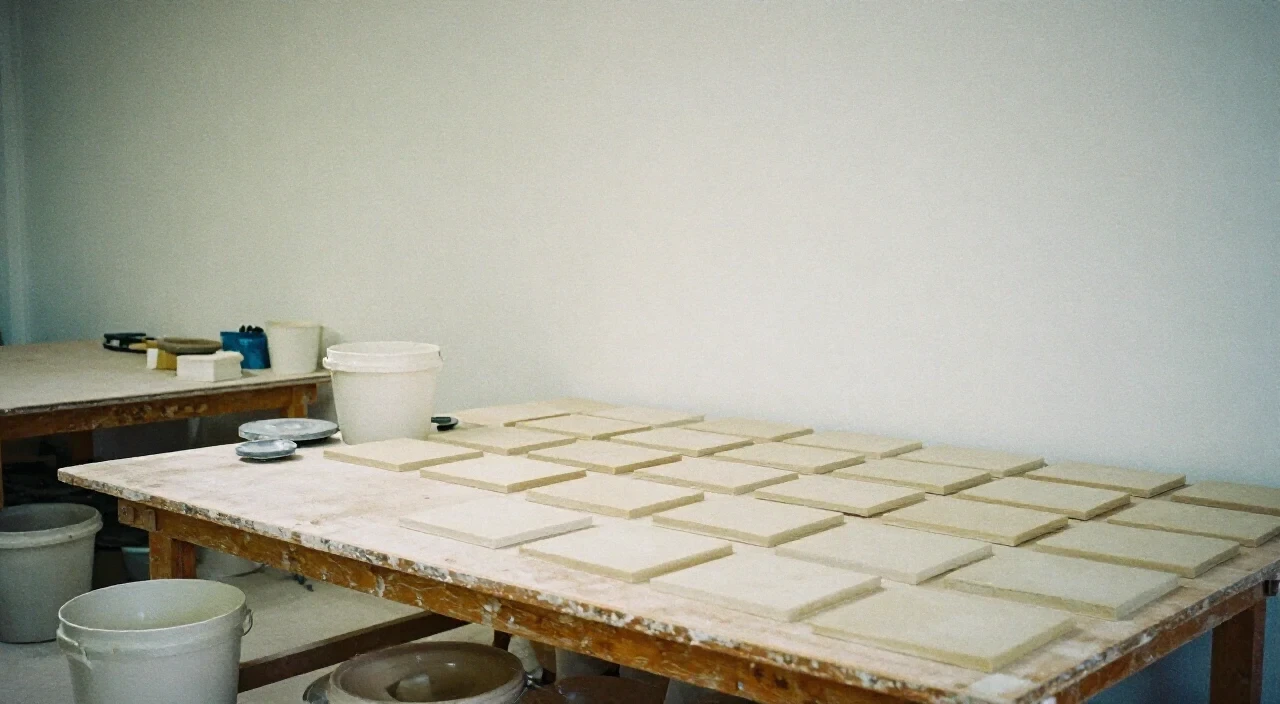
Budget-friendly alternatives to commercial pottery glazes exist: slips and engobes, underglazes, burnishing, and small homemade test batches. They lower cost, but none is automatically food-safe or durable. Test every material on your clay body and firing temperature before trusting it on functional pieces.
Table of Contents
Key takeaways
- Slips, engobes, underglazes, and burnishing are the main budget-friendly alternatives to commercial glaze.
- Every alternative must be tested on your clay body, firing temperature, and intended use before it is trusted.
- EU rules require suppliers to classify hazardous mixtures and provide safety data sheets in the official language of the Member State.
- A labelled test-tile record is the cheapest and most reliable tool for keeping glaze costs down.
What is the cheapest alternative to pottery glaze?
The cheapest alternatives are slips, engobes, and burnishing—materials that cost little and use the clay you already have. They are not glaze replacements for every purpose. Each one needs testing on your clay body and firing temperature before you trust it on functional ware.
Slip is liquid clay. Mix clay with water until it is the consistency of cream, sieve it, and apply it to leather-hard ware. Engobe is a slip formulated to work over a different clay body, often with added frit or flux to match firing temperatures. Both are cheaper than commercial glaze because the main ingredient is the same clay body already on the wheel. Burnishing costs almost nothing: rub the leather-hard surface with a smooth stone or the back of a spoon until it shines, then fire it. The result is a sealed surface on some clay bodies, but not a glaze.
The real cost comparison includes test tiles, firing, and failures. A commercial glaze may cost more per kilogram, but it arrives with a tested recipe and predictable results. A homemade slip can fail at the first firing, and that failed piece still consumed kiln space and time. At Kaolin Ceramics Studio in Porto, the six wheels and the weekly kiln firing mean every open studio session ends with ware waiting for a glaze decision. Regulars often keep a small notebook of test tiles labelled by clay body, firing temperature, and application thickness. That habit is the cheapest tool in the studio.
Can you make pottery glaze from household ingredients?
Some household materials can colour or texture a surface, but they are not a safe substitute for glaze. Table salt, vinegar, or ash can produce effects in specific processes, yet none is automatically food-safe. Treat every homemade mix as an untested material until fired and evaluated.
Household ingredients are tempting because they are cheap and familiar. But a glaze is a chemical mixture designed to melt and mature at a specific temperature. A recipe that works in one kiln may blister, crawl, or leach on another clay body. More importantly, words like 'natural' or 'food-grade' do not tell you what happens after a glaze fires. The European Union regulates the chemicals themselves: CLP rules require hazardous mixtures to be classified, labelled, and packaged before they are placed on the market. REACH requires a safety data sheet for hazardous mixtures. That sheet follows a 16-section format under REACH Annex II and must be in the official language of the Member State where the product is marketed. In Portugal, that means asking for the SDS in Portuguese.
What does this mean for a potter in Porto? Buy raw materials from a ceramics supplier that gives you an SDS, keep the container labelled, and read the handling and disposal sections before you mix. Do not assume a substance is safe because it is sold for another use. The studio's private glaze session exists for exactly this reason: a structured session to weigh, sieve, and test a small batch with guidance, rather than guessing with kitchen ingredients.
Household ingredients are tempting because they are cheap and familiar.