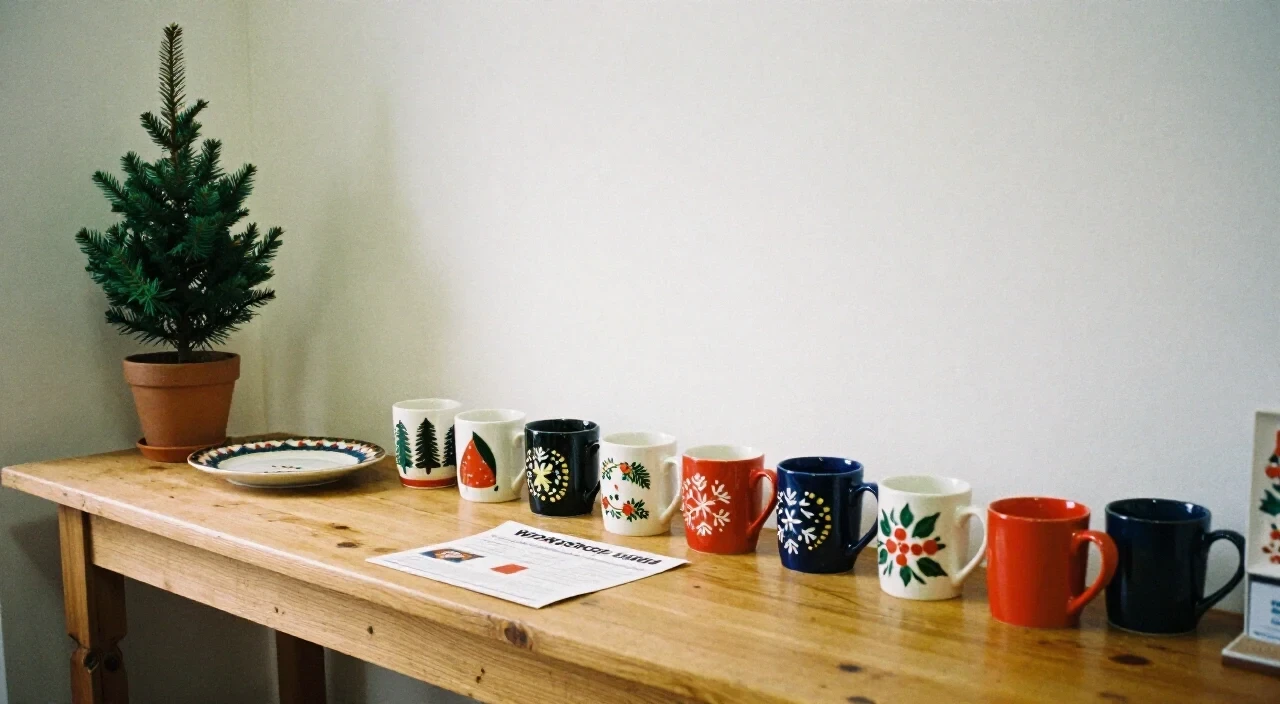
A focused seasonal marketing plan launches in early November, showcases food-safe mugs, decorative plates, and workshop vouchers, uses Instagram reels, Porto’s December market stalls, and timed discounts, while respecting EU food-contact rules and clear production deadlines to turn Christmas demand into reliable pottery sales.
Table of Contents
- 01When should a ceramics studio start its Christmas marketing campaign?
- 02Which pottery items make the best Christmas gifts?
- 03How can workshops and gift vouchers be packaged as holiday presents?
- 04What compliance and packaging steps ensure food-safe Christmas pottery sales?
- 05Frequently asked questions
- 06Sources
- 07Read next
Key takeaways
- Start marketing by early November
- Choose food-safe mugs, plates, and workshop vouchers as gift items
- Use a production calendar with a 3-week cut-off before Christmas
- Leverage Instagram, local markets, and Portuguese-language vouchers
- Check EU food-contact compliance and label properly
When should a ceramics studio start its Christmas marketing campaign?
The optimal launch date is the first week of November, giving at least six weeks to build awareness, showcase products, and allow a three-week production buffer before the holiday rush.
Starting early aligns the studio with Porto’s citywide festive programme, which typically runs from late November through December. The first step is to map the internal production calendar: clay shaping (1-2 weeks), drying (1 week), first firing (2 days), glazing and refiring (another week), and final quality control. Adding a safety buffer of at least five business days protects against unexpected kiln delays.
Next, set marketing milestones. Week 1-2: teaser posts on Instagram and Facebook highlighting new holiday collections. Week 3-4: announce limited-edition food-safe mugs and gift-set bundles, emphasizing the “próprio para alimentos” label. Week 5-6: push workshop and voucher packages, tying them to specific dates in December when the studio will host holiday-themed classes.
Common mistakes include announcing Christmas delivery dates before the production cut-off is fixed, which leads to missed promises. By publishing a firm “order by” date—ideally three weeks before Christmas—customers know the latest day they can place an order and still receive it in time.
Finally, coordinate with local market organisers. Porto’s official Christmas market registration usually opens in September; confirm stall availability and any permit fees before committing promotional spend.
Which pottery items make the best Christmas gifts?
Top gifts are food-safe mugs, decorative plate sets, and curated gift bundles that combine a piece of pottery with a workshop voucher, all presented in festive packaging.
Mugs are perennially popular because they blend utility with personal style. Ensure each mug carries the EU-mandated lead- and cadmium-migration limits and is marked with the food-contact symbol and “próprio para alimentos”. A simple, hand-painted design that reflects Portuguese holiday motifs adds a local touch.
Decorative plates—especially those featuring seasonal patterns or hand-stamped initials—work well as display items. They do not require food-contact certification, but clear labeling that they are “decorative only” avoids regulatory confusion.
Gift bundles increase average order value. Pair a set of two mugs with a printed voucher for a half-day pottery workshop. Include a small card with safe-use instructions and care tips; this not only satisfies compliance but also enhances the perceived value.
Packaging matters. Use recyclable cardboard boxes with a double-wall insert to protect delicate pieces during delivery. Add a ribbon or a small pine-sprig for a holiday feel, and include a printed compliance sheet for any food-contact items.
Avoid the mistake of discounting every item heavily. Instead, price bundles to reflect the added experience, and reserve deep discounts for end-of-season clearance after Christmas.
How can workshops and gift vouchers be packaged as holiday presents?
Present workshops as experiential gifts by issuing printable vouchers in Portuguese, offering specific dates in December, and pairing them with a small ceramic token that serves as a reminder.
Design the voucher on the studio’s letterhead, include the phrase “Vale-presente para workshop de cerâmica”, the valid dates, and a brief description of the class content. Use a festive colour palette and add the studio’s logo for authenticity.
When selling in-person at Porto’s Christmas market, keep printed vouchers on hand for immediate purchase. For online sales, send a high-resolution PDF that the buyer can print or forward directly to the recipient.
Bundle the voucher with a miniature hand-thrown bowl or a set of coasters. These items are decorative, so they do not need food-contact certification, but they reinforce the ceramic theme.
Promote the bundles on Instagram Stories with a swipe-up link to the studio’s booking page. Highlight limited slots—only a handful of workshops are available each evening—to create urgency without over-promising.
A common error is to list workshop dates without confirming studio availability. Keep an internal calendar of open slots, and update the voucher template as soon as a date is booked to avoid double-booking.
What compliance and packaging steps ensure food-safe Christmas pottery sales?
Compliance requires EU Regulation (EC) No 1935/2004, Directive 84/500/EEC limits on lead and cadmium, a written declaration of conformity, and clear “próprio para alimentos” labeling on every food-contact item.
First, verify that the glaze supplier provides test reports confirming migration limits are met. Keep these documents on file for any inspection. Attach a one-page declaration to each product batch, stating that the piece complies with the applicable EU limits.
Second, label each mug or bowl with the food-contact symbol and the phrase “próprio para alimentos”. If the item has special care instructions—e.g., hand wash only—print them on a small tag inside the box.
Third, package safely for shipping. Use a double-wall cardboard box, a layer of biodegradable packing peanuts, and a cardboard insert that holds the piece upright. Seal the box with festive tape that does not obscure the compliance label.
Fourth, set a clear “order by” deadline—three weeks before Christmas—to guarantee the production timeline (shaping, drying, firing, glazing, QC) is completed before the final dispatch window.
Mistakes to avoid: claiming any glazed piece is food-safe without documented testing, and neglecting to include the compliance declaration, which can lead to regulatory penalties and loss of customer trust.
Set a firm production cut-off date at least three weeks before Christmas. This buffer protects against kiln delays, quality-control checks, and packaging time, ensuring every order reaches the customer before the holiday.
Frequently asked questions
What pottery makes the best Christmas gifts?
Hand-painted mugs, decorative plate sets, and gift bundles that include a workshop voucher are most sought after. They combine everyday usefulness with a personal, artistic touch.
Are handmade mugs food-safe for hot drinks?
Only if the glaze complies with EU lead- and cadmium-migration limits and the piece bears the “próprio para alimentos” label together with a written declaration of conformity.
Can I sell my ceramics on Instagram during the holidays?
Yes. Use Instagram Reels and Stories to showcase new holiday designs, run limited-time discount codes, and link directly to the studio’s online shop or booking page. Highlight local pickup options for Porto customers to reduce shipping delays.