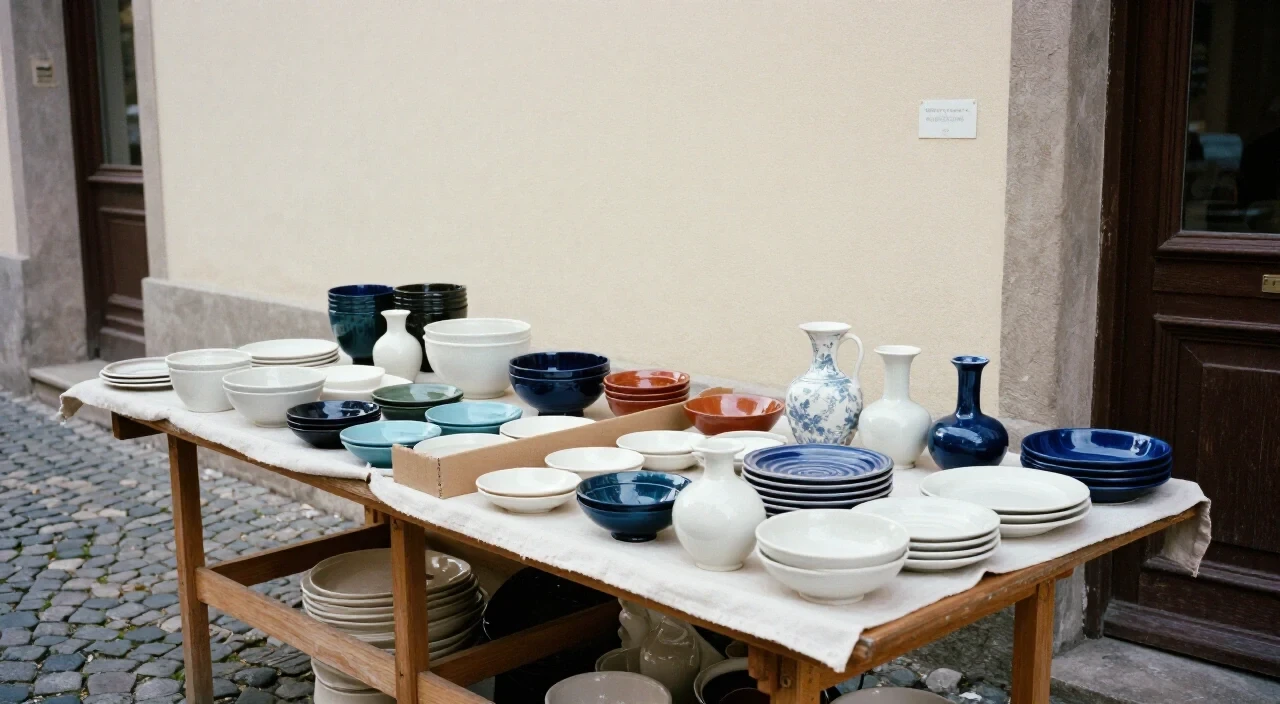
Selling ceramics in Lisbon’s Fado district is possible through the municipal Feira da Ladra market, but you need a personal licence, the right documents, and to respect fee and tax rules before traveling from Porto. The licence can cover one to three months, costs are calculated per square metre per day, and VAT registration may apply depending on turnover.
Table of Contents
- 01Can I sell handmade ceramics at Feira da Ladra in the Fado district?
- 02What licence do I need and how much does a stall cost?
- 03Which documents and tax steps are required for a Porto ceramicist?
- 04How do I prepare fragile ceramics for a street market in Alfama?
- 05Frequently asked questions
- 06Sources
- 07Read next
Key takeaways
- Feira da Ladra accepts ceramics with a craft licence
- Licence fees are €1.89 per day per square metre
- Documents: ID, NIF and purchase invoices
- VAT registration required above €15,000 turnover
- Prepare fragile pieces with protective packaging
Can I sell handmade ceramics at Feira da Ladra in the Fado district?
Yes, Feira da Ladra welcomes artesanato, which includes handmade ceramics, provided you hold an approved occasional or monthly craft licence and a stall is available in the Fado-area on market days. The fair operates Tuesdays and Saturdays from 09:00 to 18:00.
The licence is personal and non-transferable; you must apply through the municipal Loja Lisboa office and secure a slot before the market day. Availability is limited, especially in the historic Alfama streets, so early booking improves the chance of acceptance. Once approved, you may only sell items listed on the licence—ceramics in this case—and must keep purchase documents ready for inspection.
Common mistake: assuming any open space in Alfama allows spontaneous vending. Inspectors regularly patrol the market and can fine sellers who operate without a licence or who display products outside the authorised category. Always display your licence visibly at the stall.
When in doubt, contact the municipal market office for confirmation of open slots and any special requirements for fragile goods.
What licence do I need and how much does a stall cost?
You need an occasional or monthly craft licence issued by the Lisbon municipality; the fee is €1.89 per day per square metre, payable when the licence is granted. licences cover one to three months, with a maximum of three licences per applicant.
Steps to obtain the licence:
- Book an appointment at a Loja Lisboa office (phone or online).
- Present a Portuguese Citizen Card or valid ID and your Tax Identification Number (NIF).
- Indicate the product category (ceramics) and the desired dates.
- Pay the daily rate based on the stall size you request.
If you choose a monthly licence, the total cost equals the daily rate multiplied by the number of days the market is open each month (typically eight days). For a 2 m² stall, the monthly cost would be roughly €30-€35, but confirm the exact amount with the current municipal tax table.
Licences are personal; they cannot be transferred to another artist. After three months of activity, the municipality may request proof of business commencement and a prior notification of continued operation. Failure to renew on time results in loss of the licence and possible fines.
Remember: the fee does not include electricity or additional safety equipment, which some markets charge separately.
Which documents and tax steps are required for a Porto ceramicist?
The essential paperwork includes a valid ID (Citizen Card or passport), your Portuguese NIF, and the approved craft licence. You must also keep purchase invoices for every ceramic piece you intend to sell, as inspectors can request them at any time.
Tax considerations:
- Portugal’s standard VAT rate is 23%. If your annual turnover exceeds €15,000, you must register for VAT and issue invoices that include the tax.
- Below that threshold, you may operate under the simplified regime, but you still need to report income to the tax authorities.
- When you start selling in Lisbon, notify the Porto tax office of the new activity to avoid duplication of registration.
Practical checklist:
- Verify that your NIF is active and linked to your business activity.
- Print a copy of the licence and keep it at the stall.
- Prepare a simple invoice template that records date, item description, price, and VAT (if applicable).
- Store all purchase receipts in a folder for quick inspection.
A common error is forgetting to update the tax regime after crossing the €15,000 turnover mark, which can lead to retroactive VAT assessments and penalties. Regularly review your sales figures to stay compliant.
How do I prepare fragile ceramics for a street market in Alfama?
Transport and display of delicate pottery require extra care; protect each piece with cardboard, bubble wrap, and sturdy packaging, and allocate enough stall space to avoid crowding. Inspectors may check that your setup does not pose a safety hazard.
Preparation steps:
- Wrap each item individually in tissue paper, then a layer of bubble wrap.
- Place wrapped pieces in a corrugated cardboard box with dividers to prevent movement.
- Use a small, level table at the stall; cover it with a non-slippery cloth to keep items stable.
- Keep a spare set of packing material on hand in case of accidental damage during the day.
When arranging the display, group similar shapes together and leave a clear aisle for customers to walk. Signage should state “Handmade ceramics – fragile – please handle with care.” This reduces the risk of breakage and demonstrates professionalism.
Mistake to avoid: stacking heavy mugs on top of thin porcelain plates. The weight can crush lighter pieces, leading to loss of inventory and possible fines for selling damaged goods. Plan the layout before the market day and rehearse the setup at your Porto studio.
Tip: Bring a portable, fold-out pallet and extra cardboard sheets. A well-protected pallet lets you unload safely on uneven cobblestones and keeps your ceramics upright while you arrange the stall.
Frequently asked questions
Can a Porto-based ceramicist apply for a Lisbon market licence?
Yes. The licence is personal, not location-bound, so you may apply from Porto as long as you present a valid ID and NIF.
Do I need a separate licence for each day I sell?
The occasional licence covers up to three months and can be used on any market day within that period, provided you pay the daily fee for the exact stall size.
What happens if I sell a piece not listed on my licence?
Inspectors can issue an on-spot fine and may confiscate the item. Always ensure every product matches the category approved on your licence.