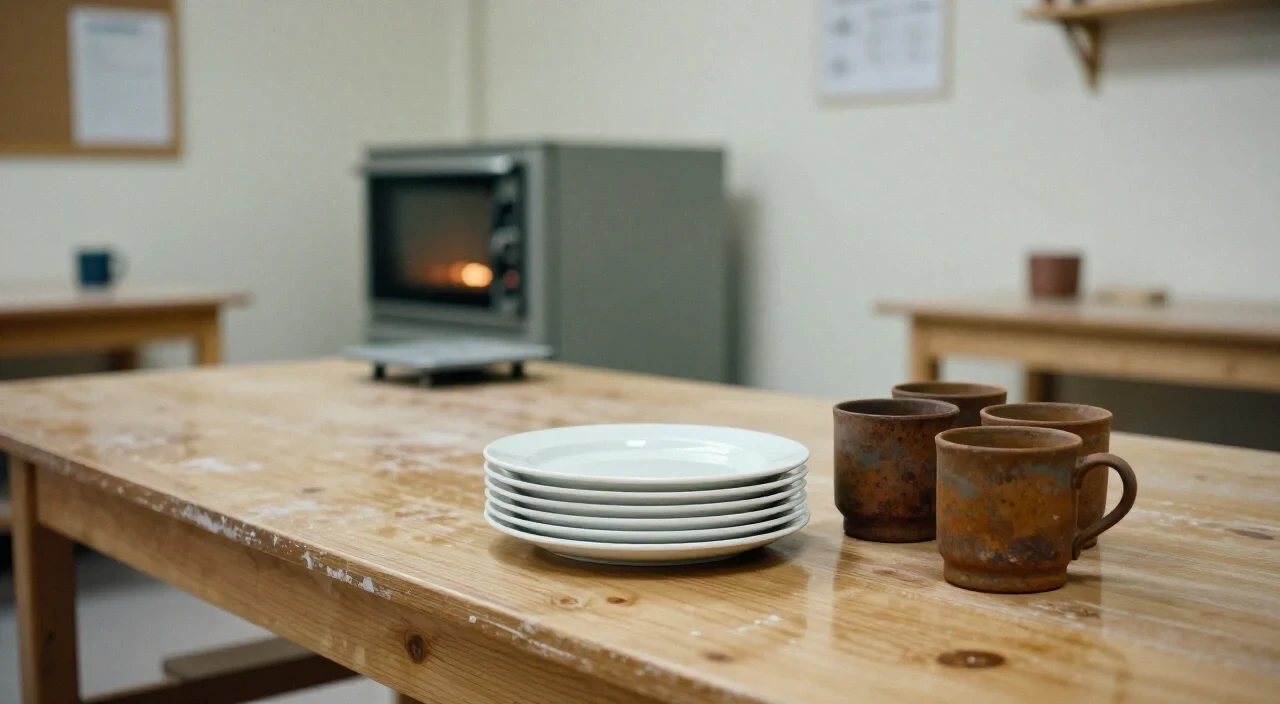
Porcelain and stoneware differ in strength, porosity, appearance, firing range, and cost; porcelain is denser, less absorbent and fires hotter, while stoneware is more robust during forming, has a warmer look and lower firing temperature. Choose based on project suitability, skill level, and EU food-contact rules.
Table of Contents
- 01Is porcelain stronger than stoneware?
- 02Which clay is better for everyday tableware?
- 03Can I use porcelain or stoneware for mugs that go in the dishwasher and microwave?
- 04What firing temperature does each clay require and how does that affect my studio work in Porto?
- 05Frequently asked questions
- 06Sources
- 07Read next
Key takeaways
- Porcelain offers higher density and translucency.
- Stoneware is more forgiving to work with and fires at lower temperatures.
- Food-safe compliance depends on glaze and testing, not just clay name.
- Local kiln capacity influences which body is practical.
Is porcelain stronger than stoneware?
Porcelain generally has higher compressive strength than stoneware because its particles are vitrified at higher temperatures, creating a denser body. However, the actual strength depends on formulation, glaze, and firing quality, so a well-made stoneware can still be very durable.
Porcelain’s vitrification occurs around 1250-1300 °C, causing the clay particles to fuse tightly and reduce internal pores. This results in a material that can withstand greater load without cracking, making it ideal for delicate forms such as thin plates or fine sculpture.
Stoneware, firing between 1150-1250 °C, retains a slightly more open grain. While its compressive strength is lower on paper, the body’s toughness and resistance to thermal shock are often superior, especially for functional items like mugs that experience rapid temperature changes.
Common mistake: assuming the label “porcelain” guarantees superior strength. In practice, a poorly fired porcelain will be weaker than a well-fired stoneware. When strength is critical, request test results from the kiln operator or evaluate the finished piece for cracks and warping.
When to ask a professional: if you need certified load-bearing specifications for architectural ceramics or large sculptural installations, consult a materials engineer or the kiln manager at Kaolin Ceramics Studio for guidance.
Which clay is better for everyday tableware?
For daily plates and mugs, stoneware is often the practical choice; it tolerates a wider range of forming techniques, fires at lower temperatures, and its slightly porous body can be glazed to a food-safe finish more reliably than delicate porcelain, especially in a busy studio.
Stoneware’s moderate firing range reduces energy costs and shortens kiln cycles—an advantage for studios sharing communal kilns in Porto where schedule flexibility matters. Its warmer, earthy tones also complement rustic table settings popular in Portuguese homes.
Porcelain provides a sleek, white surface and a subtle translucency prized for formal dinnerware, but it demands precise throwing and higher firing, increasing the risk of warping or cracking during production. Beginners may find it harder to achieve consistent wall thickness.
Food safety is governed by EU Regulation (EC) No 1935/2004 and Directive 84/500/EEC. Both bodies must meet lead and cadmium migration limits, which are verified through glaze testing, not by the clay name. Always obtain a written declaration of compliance for any glazed tableware you intend to sell.
Checklist for safe everyday tableware:
- Choose stoneware for robust, cost-effective pieces.
- Verify glaze certifications for lead-free status.
- Request a compliance declaration from the studio.
- Test for crazing after several dishwasher cycles.
- Consider the aesthetic you want—porcelain for elegance, stoneware for a rustic feel.
Can I use porcelain or stoneware for mugs that go in the dishwasher and microwave?
Both porcelain and stoneware can be dishwasher- and microwave-safe if the glaze is properly formulated and the piece passes EU migration testing; however, stoneware’s lower water absorption often makes it less prone to crazing, while thin-walled porcelain mugs may chip if not handled carefully.
Microwave safety hinges on the absence of metallic pigments in the glaze and on a uniform body that does not expand unevenly. Stoneware’s denser, slightly porous matrix absorbs less moisture, reducing stress during rapid heating.
Porcelain mugs offer a refined look but require careful thickness control. A wall that is too thin can develop micro-cracks during the high-temperature firing, which later manifest as chips under dishwasher jets. Selecting a glaze with a low coefficient of thermal expansion mitigates this risk.
EU food-contact rules do not differentiate between porcelain and stoneware; they focus on the final glazed product. Manufacturers must conduct lead and cadmium migration tests under specified conditions and provide a written declaration of compliance. Ask Kaolin Ceramics Studio for this documentation before selling any mug.
Practical steps for home users:
- Inspect the glaze for a smooth, crack-free surface.
- Avoid sudden temperature shocks (e.g., pouring boiling water into a cold mug).
- Run a short dishwasher cycle first to confirm no crazing.
- Replace any mug that shows glazing defects or chips.
What firing temperature does each clay require and how does that affect my studio work in Porto?
Porcelain typically requires a high fire of 1250-1300 °C, demanding a kiln that can hold consistent heat, while stoneware matures between 1150-1250 °C, allowing a slightly slower ramp-up and more margin for error—important for studios sharing community kilns in Porto’s local area.
Higher firing temperatures increase energy consumption and may limit the number of pieces you can run per load. In Porto, many community kilns run on natural gas, and the cost differential between a 1200 °C and a 1300 °C soak can be significant. Stoneware’s lower peak reduces fuel use and shortens the overall firing schedule.
The temperature window also influences glaze compatibility. Porcelain glazes often need the same high peak to achieve a fully vitrified, glossy surface, whereas stoneware glazes can mature at slightly lower temps, giving you more flexibility to experiment with color and texture without risking glaze defects.
When planning a project, consider:
- Kiln capacity and availability in your neighborhood workshop.
- The skill level of the potters—porcelain demands tighter control of drying and handling.
- Production timeline—stoneware can be turned around faster due to shorter cooldown periods.
- Cost implications—higher fire = higher utility bills and possibly higher product price.
If you are unsure which body fits your schedule or budget, discuss your project with the instructors at Kaolin Ceramics Studio. They can recommend a firing plan that aligns with local kiln resources and EU compliance requirements.
Always request a written declaration confirming that the final glazed piece meets EU lead and cadmium migration limits before selling it as tableware. Without this documentation, the item cannot be marketed as food-safe in the EU.
Frequently asked questions
Is porcelain more expensive than stoneware?
Porcelain generally costs more because of higher raw-material prices and the need for a hotter, longer firing cycle. Stoneware’s lower firing temperature and broader availability of raw clays usually make it the more budget-friendly option.
Does stoneware absorb more water than porcelain?
Stoneware is slightly more porous than fully vitrified porcelain, so it can absorb a small amount of moisture if unglazed. Proper glazing eliminates this difference, making both suitable for functional ware when the glaze is correctly applied and fired.
Which clay is easier for beginners to throw?
Stoneware is typically easier for novices because its plasticity tolerates a wider range of moisture levels and it is less prone to cracking during drying and firing. Porcelain demands precise water content and careful handling to avoid warping.