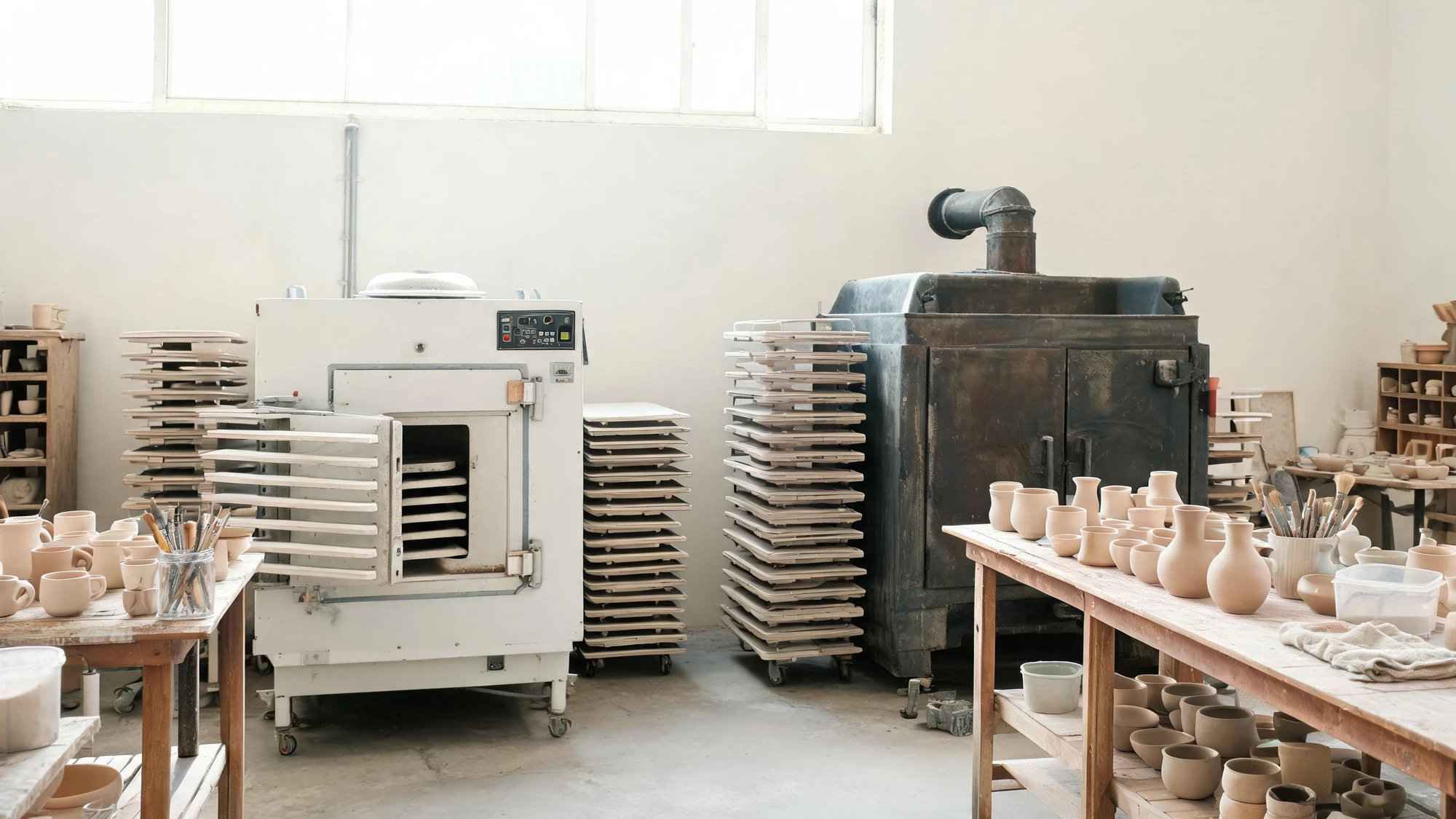
The kiln comparison for small studios involves weighing electric kiln and gas kiln options based on factors like cost, space, and firing control.
Table of Contents
Key Takeaways
- Consider cost and space when choosing a kiln
- Assess firing control and consistency needs
- Evaluate ventilation and safety requirements
- Research local suppliers and maintenance options
What is the difference between electric and gas kilns?
Electric kilns offer easier temperature control, while gas kilns provide more even heat distribution.
When deciding between electric and gas kilns, consider the specific needs of your small studio. For example, if you prioritize precise temperature control, an electric kiln might be the better choice. However, if you require a more traditional firing experience, a gas kiln could be more suitable.
- Consider the cost of purchasing and maintaining each type of kiln
- Assess the space available for the kiln in your studio
- Evaluate the type of ceramics and pottery you plan to produce
How long does it take to fire a kiln?
Firing time varies depending on the kiln type, size, and material being fired.
The firing process can take anywhere from a few hours to several days. It's essential to research and understand the firing times for your specific kiln and materials to ensure the best results.
- Research the recommended firing schedules for your kiln and materials
- Monitor the kiln's temperature and adjust the firing time as needed
- Keep a record of your firing times and results to refine your process
What does a kiln cost?
Kiln costs vary widely, depending on the type, size, and features.
The price of a kiln can range from a few hundred to several thousand euros. It's crucial to consider your budget and the specific needs of your small studio when selecting a kiln.
- Research different kiln models and their prices
- Consider the cost of any additional features or accessories
- Factor in the cost of maintenance and repairs over time
When purchasing a kiln, ensure it meets local safety standards and regulations, and consider consulting with a professional if you're unsure about any aspect of the process.
How do I choose the right kiln for my small studio?
Choose a kiln that fits your space, budget, and firing needs.
Consider the type of ceramics and pottery you plan to produce, as well as the level of control and consistency you require. It's also essential to research local suppliers and maintenance options to ensure you can get the support you need.
- Assess your studio's space and ventilation capabilities
- Evaluate your budget and the cost of different kiln options
- Research local kiln suppliers and maintenance services
Frequently Asked Questions
What is the most energy-efficient kiln type?
Electric kilns are generally more energy-efficient than gas kilns.
Can I use a kiln in a small space?
Yes, there are kiln models designed for small spaces, but ensure proper ventilation and safety precautions.
How often should I maintain my kiln?
Regular maintenance is crucial; check and clean your kiln after each use, and perform deeper maintenance tasks every few months.