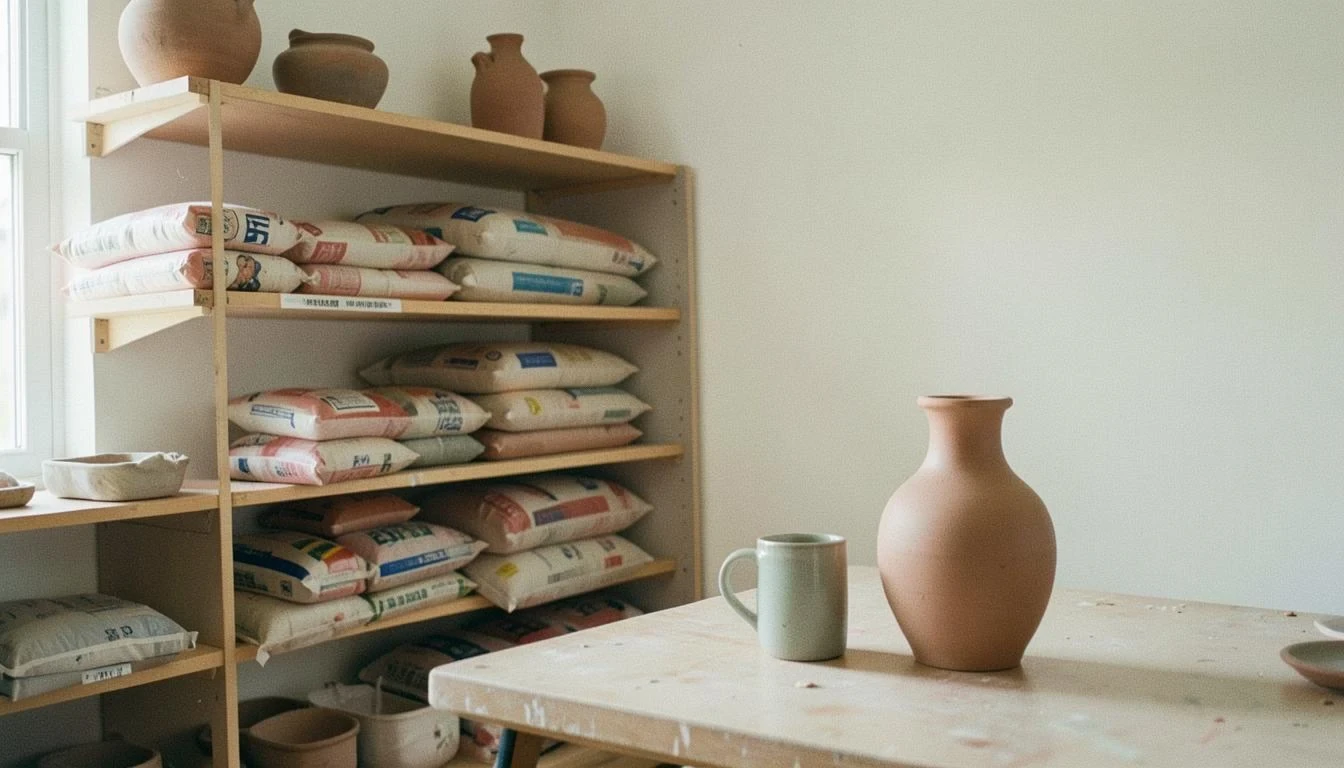
For your first pottery project, choosing **easy-to-work** beginner clay types like **earthenware** or **stoneware** is ideal. These clays fire at lower temperatures, are forgiving, and available locally in Porto. Avoid highly plastic clays unless supervised.
Table of Contents
Key takeaways
- Start with earthenware or stoneware for ease
- Avoid highly plastic or specialty clays as a beginner
- Check firing temperature ranges
- Ask suppliers for starter packs
- Visit local studios like Kaolin Ceramics Studio for guidance
What are the best beginner clay types?
The best beginner clay types are earthenware and stoneware. Earthenware fires at lower temperatures (around 1,000–1,150°C), making it easier to shape and repair. Stoneware, firing between 1,150–1,300°C, is slightly more durable but still manageable.
- Earthenware: Best for hand-building and decorative pieces. It shrinks less during drying and firing.
- Stoneware: More durable for functional items like mugs or bowls. Requires slightly more skill but is still beginner-friendly.
Avoid porcelain or ball clay as a beginner, as they require more experience to handle.
How do I know if clay is right for my project?
Match the clay to your project’s purpose and your skill level. Earthenware is ideal for decorative pottery, while stoneware suits functional items. Check the clay’s plasticity (how easily it bends) and drying shrinkage (how much it contracts before firing).
- For hand-building, choose a clay with moderate plasticity.
- For wheel-throwing, opt for a slightly firmer clay to avoid collapsing.
Test a small batch first. If the clay cracks excessively or feels too sticky, it may not be suitable.
Always ask suppliers about the clay’s firing range. Some beginner clays require specific temperatures, and misfiring can ruin your work.
Where can I buy beginner-friendly clay in Porto?
Many local art supply stores and ceramics studios in Porto carry beginner clay types. Kaolin Ceramics Studio offers guidance on clay selection, and suppliers often sell starter packs with essential tools. Always ask if the clay is pre-mixed for beginners or if it requires additional preparation.
- Check art supply shops near the city center.
- Visit studios like Kaolin Ceramics Studio for expert advice.
- Ask about small-batch options to test different clays.
What mistakes should I avoid with beginner clay?
Common mistakes include choosing too soft or sticky clay, overworking the piece, or skipping proper drying. Beginners often rush the process, leading to cracks or warping. Always follow the drying schedule and avoid sudden temperature changes.
- Overworking clay: Kneading too much can make it brittle.
- Skipping wedging: Removes air bubbles and ensures even drying.
- Ignoring shrinkage: Measure your piece before and after drying to adjust for firing.
Frequently asked questions
What’s the difference between air-dry and firing clay?
Air-dry clay doesn’t require firing but isn’t as durable. Firing clay is stronger and waterproof after firing. Beginners should start with firing clay for better results.
Can I mix different clays?
Mixing clays can alter properties like shrinkage and firing temperature. Stick to one type for your first projects.
How do I store clay properly?
Keep clay wrapped in plastic to prevent drying. Avoid extreme temperatures and direct sunlight. Rehydrate with water if it dries out.